REVIEW · KATHMANDU
Full Day Private Tour of Kathmandu – UNESCO World Heritage Sites
Book on Viator →Operated by Shepherd Holidays · Bookable on Viator
Four UNESCO stops, one smooth day in Kathmandu.
This private tour is built for people who want major landmarks without wasting time figuring out routes. I like how it pairs a real guide with a comfortable, air-conditioned ride, so you can focus on the places: the lookout-style world of Swayambhunath and the temple-and-palace energy of Kathmandu Durbar Square.
One thing to plan for: main-site entrance fees aren’t included, so check the totals before you go and bring a little cash or card for tickets.
In This Review
- Key Things I Think You’ll Notice
- Four UNESCO Stops in One Day: The Real Shape of This 6-Hour Tour
- Price and What You Actually Get for $35
- Pickup, Drivers, and the Comfort Factor That Makes Temples Easier
- Stop 1: Swayambhunath Monkey Temple and the Story in the Details
- Stop 2: Pashupatinath on the Bagmati River, Lord Shiva in Practice
- Stop 3: Boudhanath Stupa and Tibetan-Influenced Devotion
- Stop 4: Kathmandu Durbar Square, the 17th–18th Century Heart
- How to Plan the Day: Walking Time, Entrance Fees, and What to Bring
- Who This Tour Fits Best (and Who Might Want a Different Pace)
- Should You Book This Kathmandu UNESCO Heritage Tour?
- FAQ
- What sites are included in this Kathmandu UNESCO World Heritage Sites tour?
- How long is the tour?
- Is hotel pickup and drop-off included?
- Are entrance fees included for the main sites?
- Is food or drinks included?
- Do I need to buy tickets in advance?
- Is this tour private or shared?
- Does the tour provide transportation?
- Is free cancellation available?
Key Things I Think You’ll Notice
- Hotel pickup and drop-off mean less hassle before and after a temple-heavy day.
- A private guide helps you connect symbols, architecture, and religion across four very different sites.
- Air-conditioned private transportation keeps the day comfortable, especially in traffic.
- Each UNESCO stop is timed at about one hour, so you get coverage without feeling stuck.
- You’ll get bottled water, plus a mobile ticket for a smoother day.
Four UNESCO Stops in One Day: The Real Shape of This 6-Hour Tour
This is a focused Kathmandu heritage circuit: Swayambhunath, Pashupatinath, Boudhanath, and Kathmandu Durbar Square. The total time is about six hours, and the stop rhythm is intentionally simple—roughly an hour at each place. For many visitors, that’s the sweet spot: enough time to see what matters, but not so long that you’re exhausted and rushing photos.
The bigger value here is the mix of religious and cultural settings. You’re not just looking at buildings. You’re moving between Hindu and Buddhist sacred spaces, then ending in Kathmandu’s older city-center core. If you like the idea of understanding Nepal through its architecture and everyday worship, this route does a good job of covering the range in one day.
If you prefer slow wandering and long museum-style stops, this might feel fast. But if your goal is to tick off UNESCO sights with context, it’s set up for that.
You can also read our reviews of more private tours in Kathmandu
Price and What You Actually Get for $35
At $35 per person, this tour can be excellent value for Kathmandu—especially because it bundles several practical costs. You’re getting hotel pickup and drop-off, a private guide, private transportation in an air-conditioned vehicle, and bottled water. For many independent travelers, those basics add up quickly once you start hiring a driver and figuring out time.
Two costs you should expect but aren’t included: entrance fees to the main sites and food/drinks. That’s pretty normal for heritage tours, but it matters for budgeting. Plan your meal break separately, and keep some cash handy for any temple tickets you need on the spot.
Also note the tour lists mobile ticket and group discounts. Even though it’s a private activity (meaning it’s only your group), discounts can still apply depending on how you book and how many people are traveling together.
Bottom line: the price looks fair because the heavy lifting—transport and interpretation—is handled for you.
Pickup, Drivers, and the Comfort Factor That Makes Temples Easier
Logistics can ruin a good day of sightseeing. Here, pickup and drop-off solve the first half. You don’t have to negotiate meeting points or reorganize your afternoon after a long morning.
The transport is another win. You’re riding in an air-conditioned vehicle, and that’s not a small detail in Kathmandu. It keeps you fresher before you start climbing steps or walking through busy temple zones. Bottled water is included, which helps when you’re bouncing between four areas.
The private guide angle is also where the day becomes more than a checklist. Guides you might hear about from past bookings—like Subu, Sumit, Sumit Kharel, along with drivers such as Ram and Bijay—tend to focus on explaining what you’re seeing and why it matters to locals. That makes the monuments feel less like photo backdrops and more like living religious spaces.
Stop 1: Swayambhunath Monkey Temple and the Story in the Details
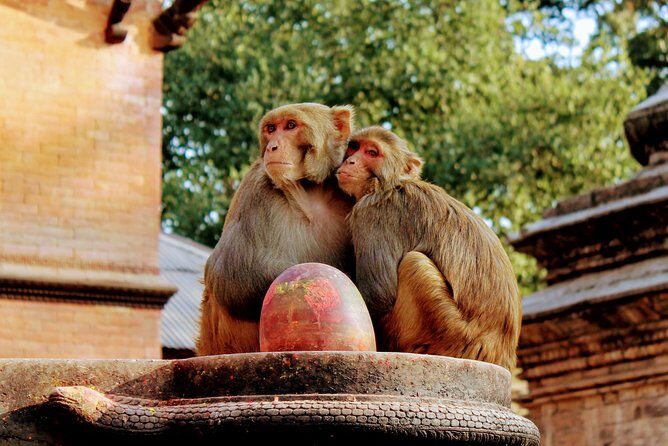
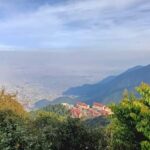
Swayambhunath is often called the monkey temple, and that nickname isn’t just for fun. It sits on a hill viewpoint and draws visitors who want both the scenery and the spirituality. The religious mix is part of its appeal: it’s significant to both Hindu and Buddhist followers.
What I like about starting here is that you get a quick introduction to the “symbol language” of Nepal. The main stupa features a lofty conical spire that’s crafted out of copper and gold plated. You’ll also see the design elements that connect the site to broader Buddhist iconography. Even if you don’t know the terms, a guide can help you link what you see—ornamentation, structure, and placement—to how people use the space.
The timing is about one hour. That’s enough to see the key views and understand what makes the site special, without turning it into an all-day climb. Admission isn’t included for this stop, so factor that into your budget.
Possible drawback: you’ll likely be dealing with crowds and uneven walking up to viewpoints. Comfortable shoes matter, and going with the flow helps.
Stop 2: Pashupatinath on the Bagmati River, Lord Shiva in Practice
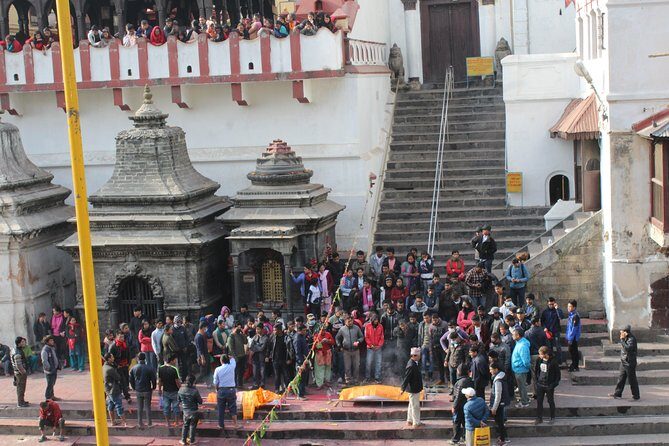
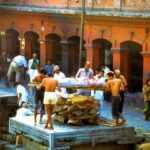
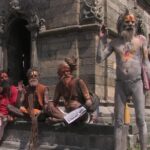
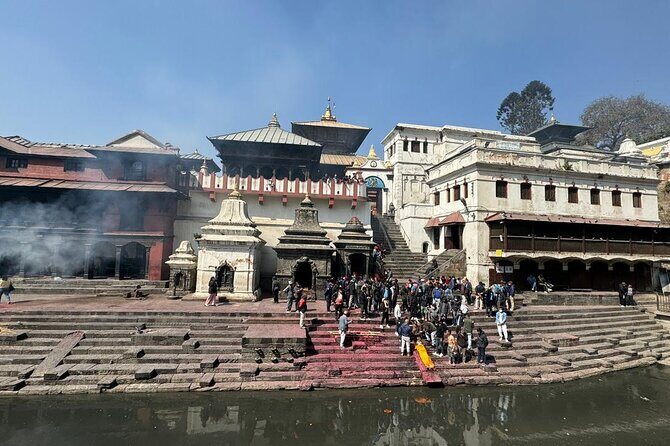
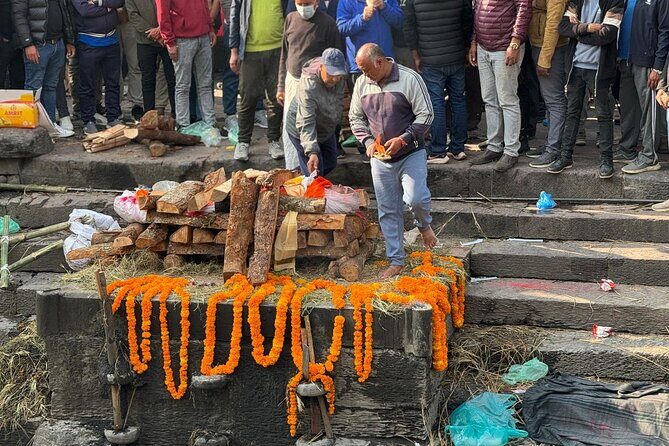
Next up is Pashupatinath Temple, one of Kathmandu’s holiest Hindu sites dedicated to Lord Shiva. It’s on the banks of the Baghmati River, and that riverside setting is important. It gives the complex a different feel than temple sites that sit alone on a street. Water, worship, and daily life sit close together.
This stop is about one hour and not built for “quick photos only.” A good guide can point out the symbolism of what you’re seeing and how it connects to Hindu practice. Even if you don’t follow the rituals, understanding the temple’s purpose changes how you read the space.
Entrance fees are not included, so again: budget for tickets. Also, keep in mind that this is an active religious site, not a museum. That means you’ll want to be respectful and give people space to continue their worship.
If you want one stop that feels most spiritually intense, this is often the one. It can also be the busiest, so arriving with a calm pace helps.
You can also read our reviews of more historical tours in Kathmandu

Stop 3: Boudhanath Stupa and Tibetan-Influenced Devotion
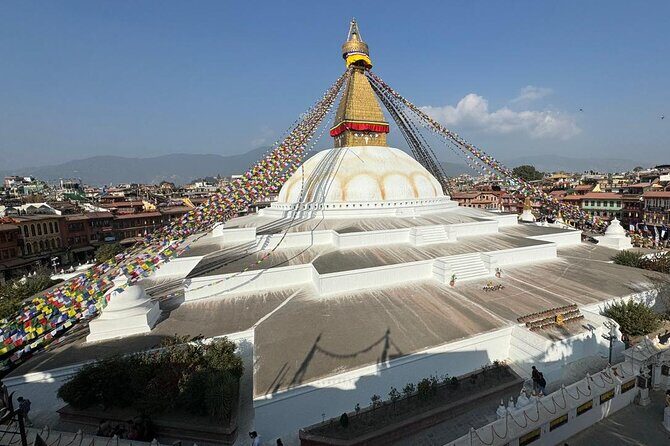
Boudhanath Stupa is the big-scale Buddhist moment on this route. It’s described as one of the largest stupas in South Asia and it shows Tibetan Buddhist influence. The stupa is whitewashed, and the all-seeing eyes of the Buddha are a signature detail that helps your brain lock onto it from a distance.
This stop is also timed at about one hour, which works well because Boudhanath is a place you can observe without needing long study. You can take in the dome, notice the icon details, and learn how this kind of monumental stupa functions in Buddhist devotion.
Admission isn’t included, but the visit itself is still a strong value because your guide helps explain what you’re seeing. Even if you’ve read general facts about Buddhism, seeing how the architecture expresses belief makes it click.
One practical tip: plan for short breaks. This area is a good place to reset before the final city-center stop.
Stop 4: Kathmandu Durbar Square, the 17th–18th Century Heart
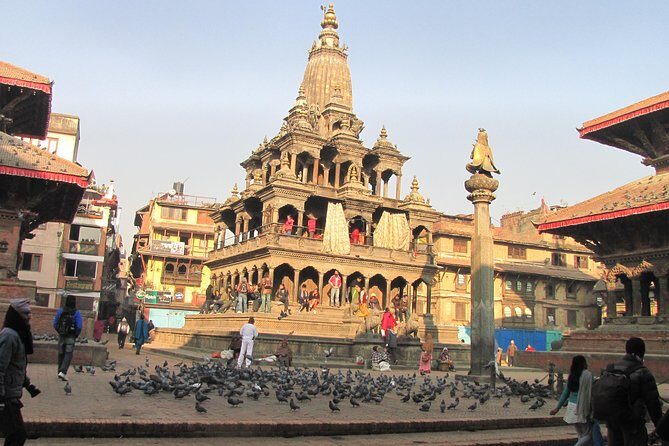
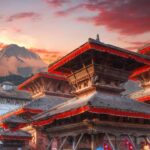
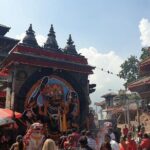
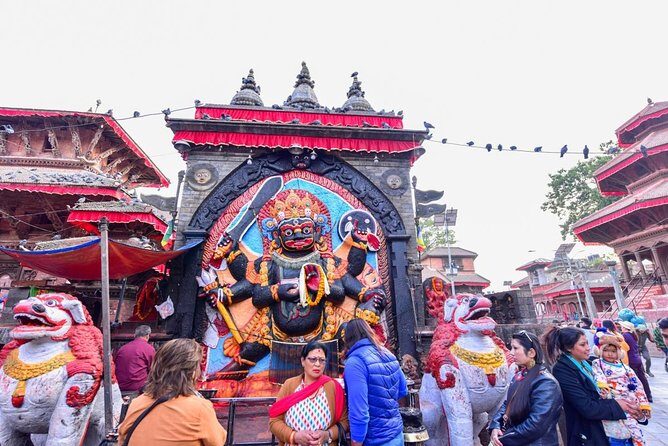
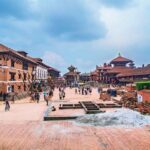
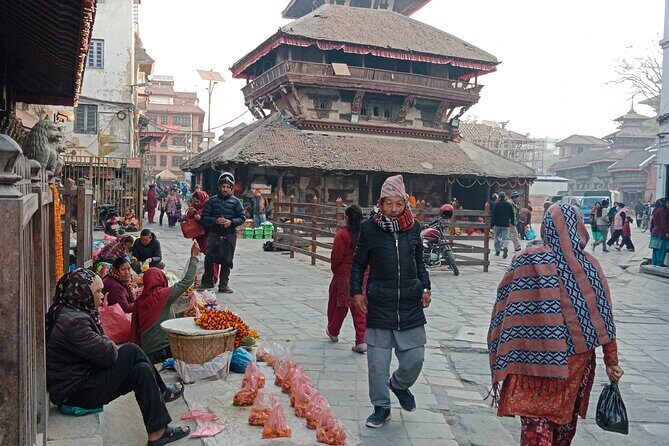
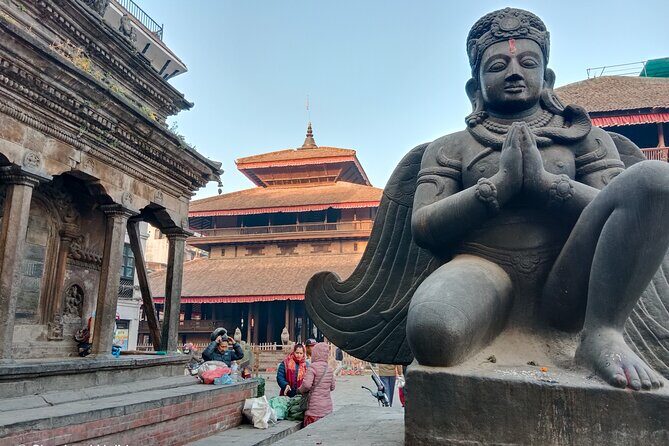
Finally, you end at Kathmandu Durbar Square, described as the traditional heart of the city and Kathmandu’s most spectacular legacy of traditional architecture. This is where the day shifts from religious worship sites to an older urban core.
The square dates back to the 17th and 18th centuries, which gives you a sense of how long this area has shaped Kathmandu’s identity. Instead of one single monument focus, Durbar Square feels more like a layered set of structures and courtyards—an architectural snapshot of a medieval era.
This stop is about one hour. It’s enough time to understand the significance, walk the main areas, and connect the architecture to Kathmandu’s wider cultural story. Entrance fees are not included here either, so it’s another budget line you’ll want to include.
Potential drawback: city-center crowds. Durbar Square can be busy, and it’s easy to feel rushed if you’re trying to see everything at once. Let your guide pace you, and focus on key buildings and vantage points rather than chasing every corner.
How to Plan the Day: Walking Time, Entrance Fees, and What to Bring
Even though the tour is about six hours, you should plan your mindset for walking and standing. You’re visiting hill-top terrain at Swayambhunath, riverside temple grounds at Pashupatinath, a monumental stupa complex at Boudhanath, and a busy heritage square at Durbar Square. The ground can be uneven and crowded in places, so good footwear helps.
Here’s what’s clearly included and helpful:
- Hotel pickup and drop-off
- Private transportation in an air-conditioned vehicle
- Private guide
- Bottled water
And here’s what you’ll pay separately:
- Food and drinks
- Entrance fees to enter the main sites
So if you want a smoother experience, do two simple things. First, budget for tickets at each stop. Second, eat before you start or plan a meal break so hunger doesn’t steal your attention from the sites. The day can feel long if you’re hungry or moving too fast.
Also, the tour mentions service animals allowed and that most travelers can participate. If you have mobility concerns, the main thing to consider is walking across temple areas and getting to viewpoints.
Who This Tour Fits Best (and Who Might Want a Different Pace)
This tour is a great fit if you want:
- UNESCO World Heritage sites coverage in one organized day
- A private guide who can explain religion and symbolism as you go
- A comfortable day with pickup, drop-off, and air-conditioned transport
It also works well for first-time visitors. Four major sites in about six hours means you leave Kathmandu with a clearer picture of Nepal’s religious landscape and architectural style.
Who might not love it? If you want deep, slow time at just one location—or if you dislike crowds at popular sacred sites—this schedule may feel too tight. Also, because entrance fees and food aren’t included, people who want a fully all-in price might find the budgeting a tiny bit annoying.
Should You Book This Kathmandu UNESCO Heritage Tour?
I’d book it if your priority is smart coverage with context. $35 isn’t just cheap—it’s practical when you factor in guide time, private transport, and pickup. The four-stop route is logical: start high at Swayambhunath, move to Shiva at Pashupatinath, then shift to Buddhist monument scale at Boudhanath, finishing at the historic urban heart of Kathmandu Durbar Square.
Skip it if you’re trying to keep expenses super predictable (because entry tickets and meals are extra) or if you want a more leisurely pace with fewer locations. In that case, you’d probably enjoy a slower, single-site day.
If you do book, I’d recommend planning for tickets at the main sites and wearing shoes that handle uneven temple areas. Then let your guide do the heavy lifting—this tour is at its best when you’re listening, not just scanning for photos.
FAQ
What sites are included in this Kathmandu UNESCO World Heritage Sites tour?
The tour includes four major stops: Swayambhunath, Pashupatinath, Boudhanath, and Kathmandu Durbar Square.
How long is the tour?
The duration is approximately 6 hours.
Is hotel pickup and drop-off included?
Yes. Hotel pickup & drop-off are included.
Are entrance fees included for the main sites?
No. Entrance fees to enter the main sites are not included, and admission tickets are listed as not included for the stops.
Is food or drinks included?
No. Food & drinks are not included.
Do I need to buy tickets in advance?
You’ll receive a mobile ticket. The tour notes that a mobile ticket is included.
Is this tour private or shared?
This is a private tour/activity. Only your group will participate.
Does the tour provide transportation?
Yes. Private transportation is included, and the vehicle is air-conditioned.
Is free cancellation available?
Yes. You can cancel up to 24 hours in advance for a full refund, and within 24 hours there is no refund.