REVIEW · KATHMANDU
Oldest Local Market Walking Tour with Living Goddess Kumari
Book on Viator →Operated by Mount Glory Treks & Expedition Pvt.Ltd. · Bookable on Viator
Seeing Kumari is a rare Kathmandu moment. This 2-hour walking tour pairs Kathmandu’s old-school market life with a once-in-a-lifetime stop at Kumari Chowk, where the living goddess is part of living tradition. I love the way the walk flows from Thamel’s energy into Ason Bazaar, so you’re not just seeing sights—you’re getting your bearings fast. I also like that the guide is English-speaking and keeps the route tight, with clear context around the sites at Kathmandu Durbar Square. One thing to consider: the Kumari moment is short (about 10 minutes), and monument entrance fees aren’t included in the $40 price.
If you want a compact tour that gives you both street-level Kathmandu and a big cultural highlight, this works. You’ll also get a mobile ticket and a small-group feel (maximum 20 people), which helps when you’re walking through crowded areas. Just plan your budget for the on-site fees and bring cash for any tips and incidentals you decide to add.
In This Review
- Key things you’ll notice on this tour
- Starting in Chhaya Devi Complex, then walking into Old Kathmandu
- Thamel to Ason Bazaar: shop streets, street sense, and sensory overload done right
- Kathmandu Durbar Square: UNESCO-level architecture and the Kumari House connection
- Kumari Chowk: a focused look at the living goddess (and why it’s worth the attention)
- The route ends back in Thamel: turning a guided walk into more time on your own
- Price and what counts as good value for $40
- Who this tour is perfect for—and who may want to adjust expectations
- Timing tips, what to wear, and how to handle crowds calmly
- Should you book the Oldest Local Market + Kumari tour?
- FAQ
- What is the duration of the walking tour?
- Where does the tour start?
- What key places do we visit?
- Is the monument entrance fee included in the price?
- Is there a ticket fee to see Kumari at Kumari Chowk?
- What else should I budget for besides the $40 tour price?
Key things you’ll notice on this tour
- Ason Bazaar in one guided sweep: spices, textiles, food, instruments, and classic market shopping energy in about 30 minutes.
- Kathmandu Durbar Square plus the Kumari House context: you see the UNESCO-listed palace-temple complex and learn how Kumari fits into it.
- Kumari Chowk viewing window: a free admission stop designed to focus on seeing the living goddess.
- Small-group pacing: up to 20 people makes the walk feel manageable in a busy city center.
- Simple logistics, tight timing: a two-hour format that’s easy to place on your first day (or any day with limited time).
Starting in Chhaya Devi Complex, then walking into Old Kathmandu
Your tour starts at the main gate of the Chhaya Devi Complex (Chhaya Devi Complex, Amrit Marg, Kathmandu 44600). This is a good choice because it nudges you away from the most tourist-slick corners and into the real street network of central Kathmandu. From there, you walk through Thamel Market and then head into Ason Bazaar, which is widely known as one of the oldest market areas in Kathmandu.
That transition is the whole point. In under a couple of hours, you go from a place where many visitors begin their Kathmandu trip to a neighborhood where locals shop, haggle, and move at a faster everyday rhythm. Even if you’ve only got a short stay in the city, you’ll learn how the streets connect and where the major landmarks sit in relation to each other.
You can also read our reviews of more walking tours in Kathmandu

Thamel to Ason Bazaar: shop streets, street sense, and sensory overload done right
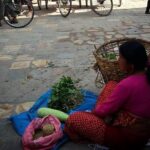
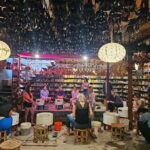
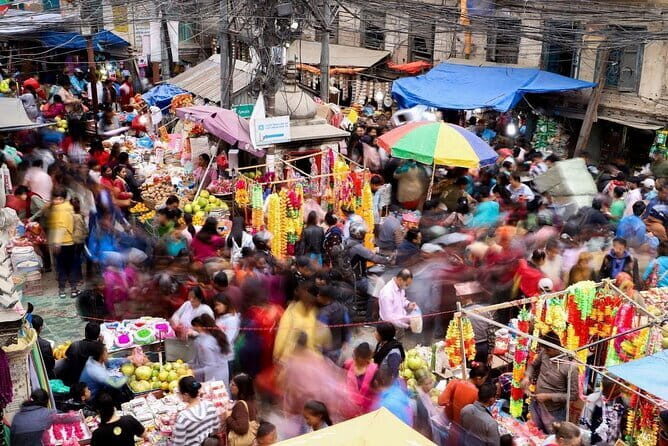
You’ll first pass through Thamel Market, then step into Ason Bazaar for about 30 minutes. Ason is known for a mix of everyday goods: spices, textiles, instruments, food, and clothes. It’s the kind of place where you can glance at a stall and realize it’s not a souvenir shop at all—this is where people buy things they actually use.
I like that the guide doesn’t treat the market like a photo stop. Instead, it’s framed like an orientation tool. You learn what kinds of products cluster in certain lanes, and you pick up how locals navigate—quick turns, compact storefronts, and the way foot traffic works in tight spaces. That makes your later self-guided wandering easier.
Two practical notes:
- Keep your pace flexible. Markets like this change quickly, with sudden bottlenecks at busy counters.
- If shopping is part of your plan, remember you’re walking. It’s smart to buy small things first, then decide on heavier items after you see how you’ll carry them.
Kathmandu Durbar Square: UNESCO-level architecture and the Kumari House connection
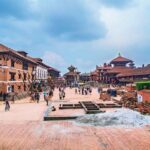
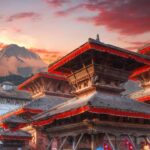
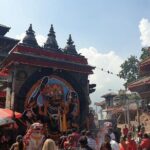
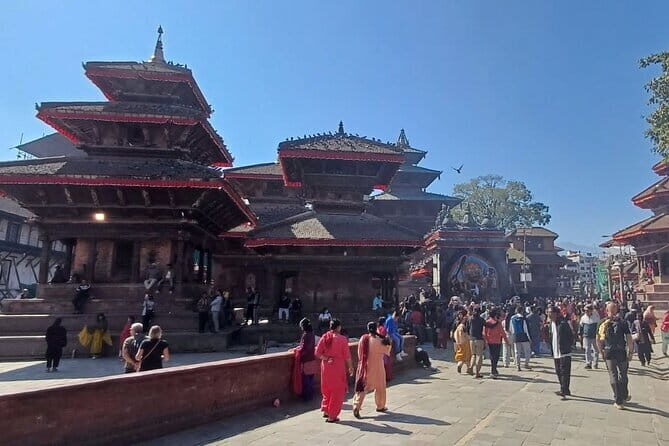
After Ason, you move to Kathmandu Durbar Square for about an hour. This is a UNESCO World Heritage site and it’s one of the best places in the city to understand how Kathmandu’s architecture tells a story—palaces, temples, courtyards, and intricate details packed into one central area.
What makes this stop especially valuable for this tour is that it connects the physical place to the living goddess tradition. Inside the broader complex is the Kumari House, and your guide explains the Kumari link as part of local religious belief—Kumari being the living incarnation of the goddess Taleju. The important thing here isn’t just the symbolism; it’s where it’s located and how the tradition sits inside the civic-religious geography of Kathmandu.
If you’re trying to prioritize, this is where the time usually pays off most. An hour gives you enough to look around without feeling rushed, while still keeping the day moving toward the Kumari-focused stop.
Possible drawback: the Durbar Square experience depends a lot on crowd flow and viewing angles. Even with a guide, you might not get long, quiet moments everywhere. If you’re the type who wants a slow, photographic crawl, you may feel a bit “managed.” On the flip side, if you want context and a smooth route, this pacing is a win.
Kumari Chowk: a focused look at the living goddess (and why it’s worth the attention)

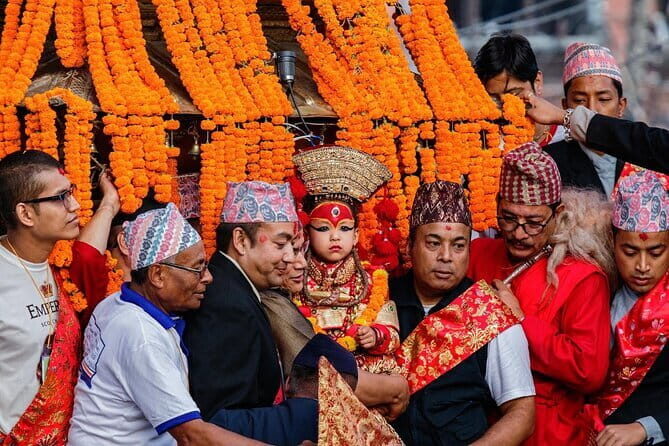
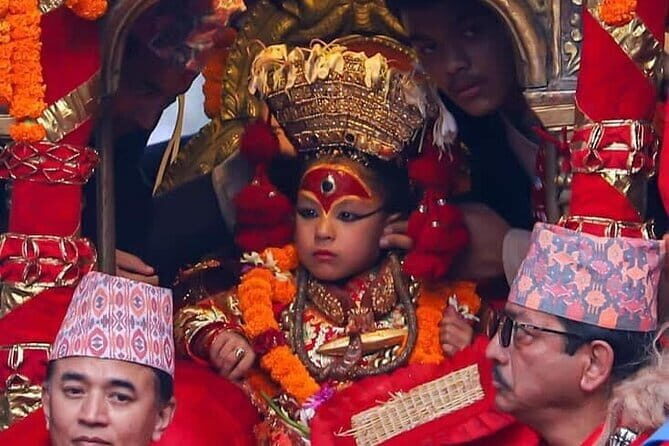
The tour’s short final highlight is Kumari Chowk, where you can witness the living goddess Kumari. This stop is about 10 minutes, and importantly, the admission ticket for this part is listed as free.
Ten minutes sounds brief—and it is. But the way it’s structured makes sense. The experience is meant to be a focused moment, not a long stay that disrupts the tradition and daily flow of the area. You go in expecting to see Kumari as part of a ceremonial and cultural setup, then you move on.
That short viewing window is also why the guide’s role matters. A good guide helps you understand what you’re looking at and how the tradition works within Kathmandu’s temple-centered world. The result is that you’re not just staring. You’re watching with context, and that changes everything.
People often describe this part in emotional terms, including the feeling of Kumari’s powerful presence. The practical takeaway for you: come prepared to be still and attentive. If you spend the whole 10 minutes trying to find the perfect angle, you’ll miss the point of the encounter.
The route ends back in Thamel: turning a guided walk into more time on your own
After Kumari Chowk, you return toward Thamel, following back through the Ason Bazar market area for anyone who wants more time. This is a smart design for two reasons.
First, it gives you a chance to pick up anything you saw earlier but didn’t buy yet—especially since Ason offers a range of goods beyond typical tourist trinkets. Second, it lets you decompress after the concentrated cultural moment at Durbar Square and Kumari Chowk. Your body will feel it after hours of walking and dense crowds, even if the total duration is only about 2 hours.
If you want to turn this tour into a fuller day, think about what you’d like next in Thamel: a meal, a souvenir browse, or a rest stop where you can plan tomorrow’s sights.
You can also read our reviews of more shopping tours in Kathmandu

Price and what counts as good value for $40
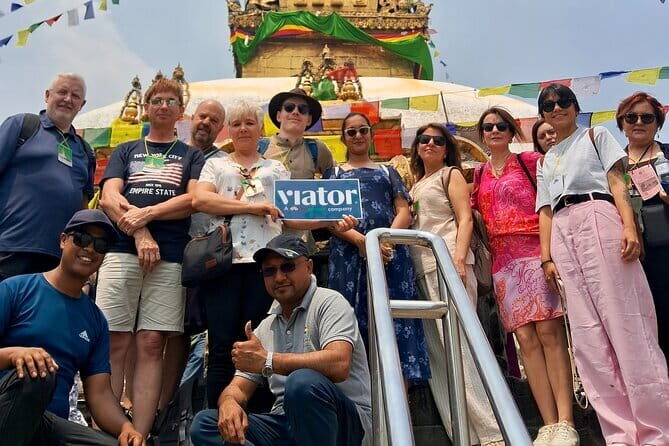
The price is $40.00 per person for the walking tour, and it’s a small-group activity with a maximum of 20 people. It’s typically booked about 21 days in advance on average, which usually means the operator maintains reliable schedules during peak times.
Here’s where the value math gets real:
- Included: an experienced English-speaking guide, plus company service charge and tax.
- Not included: monument entrance fees listed as NPR 1000 per person, plus tips for the guide, and food & beverages.
So you should treat the $40 as the guide + routing + walking time, then budget separately for the on-site fee. If you compare that to hiring a private guide for the same compact loop, you’ll often see why this format is a bargain—especially because it layers market orientation and the Kumari experience into one package.
One more value point: a mobile ticket reduces friction. In cities where meeting points can be confusing, having a clear ticket helps keep things smooth.
Who this tour is perfect for—and who may want to adjust expectations
This is ideal if:
- You’re in Kathmandu for a short time and want big cultural value in about 2 hours.
- You like guided context. The Kumari tradition is meaningful, and the guide’s explanations help you understand it without turning it into a random stop.
- You want an early orientation loop: Thamel to Ason to Durbar Square gives you a mental map quickly.
You might want a different style of tour if:
- You prefer long, unstructured time at major monuments. The Durbar Square portion is about an hour, and the Kumari viewing is only about 10 minutes.
- You hate walking in busy areas. This route passes through central market streets, and those lanes can be tight.
In short: it’s built for people who want the highlight without burning the whole day.
Timing tips, what to wear, and how to handle crowds calmly
Even with a well-planned route, central Kathmandu is a place where comfort matters. Wear shoes with traction and keep your daypack light, since you’ll be walking between market lanes and landmark areas. If you’re sensitive to crowds, keep your expectations realistic—market streets and Durbar Square attract foot traffic.
Also, plan your money. Because the monument entrance fee is not included, you’ll want to have enough cash ready. Tips are also not included, so decide in advance what feels fair for a good guide.
For the Kumari Chowk stop, bring a calm mindset. The experience is brief by design, so it helps to show up ready to watch respectfully and avoid last-minute scrambling.
Should you book the Oldest Local Market + Kumari tour?
If you’re asking whether it’s worth it, my answer is yes—with the right expectations. This tour is a strong choice because it’s not just sightseeing. It’s a practical Kathmandu orientation that combines:
- the shopping world of Ason Bazaar,
- landmark context at Kathmandu Durbar Square,
- and a focused, culturally significant Kumari Chowk viewing.
Where it may not fit you is if you want a slow, detailed wander or if you’re only interested in one single place. This works best as a compact, guided “get oriented and see the headline” experience.
If you book, do it with a plan for the extra on-site fee and bring comfortable shoes. Then show up ready for a short but memorable encounter—one that many people describe as unforgettable for a reason.
FAQ
What is the duration of the walking tour?
The tour lasts about 2 hours (approx.).
Where does the tour start?
It starts at the main gate of Chhaya Devi Complex (Chhaya Devi Complex, Amrit Marg, Kathmandu 44600, Nepal).
What key places do we visit?
You walk through Thamel Market, visit Ason Bazaar, then go to Kathmandu Durbar Square, and stop at Kumari Chowk to witness Kumari, before returning toward Thamel.
Is the monument entrance fee included in the price?
No. Monument entrance fees are not included and are listed as NPR 1000 per person.
Is there a ticket fee to see Kumari at Kumari Chowk?
The stop at Kumari Chowk lists the admission ticket as free.
What else should I budget for besides the $40 tour price?
Entrance fees (NPR 1000 per person), tips for the guide, and food & beverages are not included.