REVIEW · KATHMANDU
Kathmandu Full Day City Tour
Book on Viator →Operated by Adventure Bound · Bookable on Viator
Kathmandu can feel like a living museum, but this full-day route keeps it friendly. You get a small-group visit to UNESCO-listed spiritual giants, plus hotel pickup and an English-speaking guide who helps you make sense of what you’re seeing. I like how the tour is built for people who don’t have much time, yet still want the big cultural hits. I also like the flexibility: you can choose morning or afternoon departures and tailor your flow as you go.
If you’re hoping for fully included UNESCO site admissions, plan ahead—entry fees aren’t included. That’s the one thing that can add cost on top of the $95, depending on exactly which heritage sites you enter during your day.
In This Review
- Key things I’d plan around on this tour
- Why this Kathmandu full-day city tour is worth your limited time
- The day’s timing: how a 7-hour route stays enjoyable
- Swoyambhunath Mahachaitya: Monkey Temple first, so you can orient fast
- Patan Durbar Square: Newar craftsmanship you can actually study
- Boudhanath Stupa: one of the best places to feel the Buddhist pulse
- Pashupatinath Temple: Hindu sacred intensity in the heart of the city
- Patan beyond the Durbar Square: how extra temple visits can fit your interests
- What’s included (and why that changes the real cost)
- Your guide can make or break a heritage day
- How to prepare so your feet and photos don’t suffer
- Is this tour for you? Who will enjoy it most
- Should you book the Kathmandu Full Day City Tour?
- FAQ
- How long is the Kathmandu Full Day City Tour?
- What’s the meeting point for the tour?
- Does the tour offer hotel pickup and drop-off?
- Is admission to UNESCO World Heritage sites included?
- What are the main stops on the itinerary?
- Can I choose a morning or afternoon departure?
- What’s included in the price besides the tour itself?
- Is this a private tour or a shared group tour?
- What start time is shown for the tour?
- What’s the cancellation policy?
Key things I’d plan around on this tour
- Pick morning or afternoon: choose the start that best matches your Kathmandu schedule
- UNESCO-focused stops: Swoyambhunath, Boudhanath, Pashupatinath, and Patan Durbar Square are the core
- Guide + transport included: pickup/drop, private transport, parking fees, and taxes are covered
- Relaxed pacing for a packed day: the stops are long enough to look, not just pose for photos
- Extra Patan temples may fit in: the day can include additional Patan religious sites beyond the main square
Why this Kathmandu full-day city tour is worth your limited time
Kathmandu’s best-known sites can be overwhelming if you try to “DIY” them all in one day. This tour is designed to do the heavy lifting for you: you get a guide who points out what matters, a route that strings the major religious landmarks together, and transport so you’re not stuck negotiating rides between distant areas.
At $95 for roughly 7 hours, the value comes from what’s included—not just what you see. You’re covered with hotel pickup/drop, private transportation, bottled water, parking fees, and government taxes/service charges. That means less time organizing and more time actually looking at temples, stupas, and the everyday rhythm of people using these sacred places.
You’ll also notice the tour is set up around World Heritage sites in Kathmandu Valley. That matters because it gives your day a clear theme: Kathmandu isn’t only temples as scenery—it’s temples as a lived cultural system. The best part is that your route hits both Hindu and Buddhist sacred spaces, so you get the full cultural mix in one go.
You can also read our reviews of more city tours in Kathmandu
The day’s timing: how a 7-hour route stays enjoyable
This is a full-day tour, but the stops aren’t rushed back-to-back. The listed visit lengths are generous enough to slow down, stand back for wide views, and still get close when it’s appropriate.
A practical way to think about the flow:
- You start with a major hilltop landmark (Swoyambhunath).
- Then you move into the heritage core around Patan and Kathmandu’s stupa and temple circuit.
- You end with Pashupatinath, which is one of the most intense and meaningful spiritual sites in the city.
Your departure choice helps a lot. The tour offers morning or afternoon options, and there are several departures throughout the day. If mornings feel calmer to you, pick that. If you want softer light for photos later, pick afternoon. (Kathmandu’s light is often good either way, but your comfort matters more than perfect timing.)
One more thing: your exact schedule can feel slightly different depending on where your guide takes you within the plan and how your group moves. The operator’s focus on small-group service means you’re less likely to get lost in a crowd.
Swoyambhunath Mahachaitya: Monkey Temple first, so you can orient fast
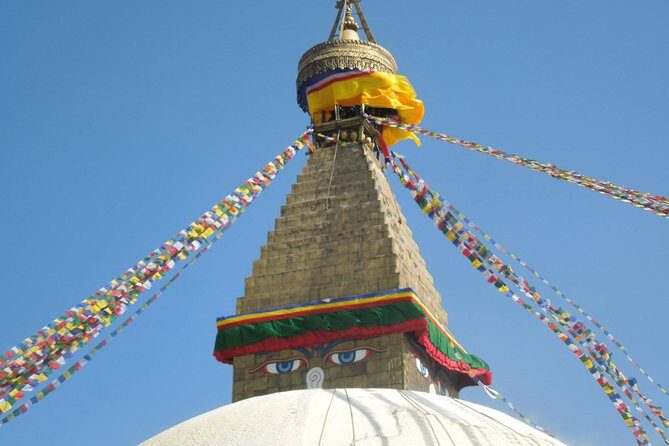
Most first-time Kathmandu days start by “collecting sights.” This one starts by collecting meaning. Swoyambhunath (also called the Monkey Temple) sits on a hilltop, which naturally gives you orientation over the valley.
You’ll spend about 1 hour at Swoyambhu Mahachaitya. That’s enough time to:
- climb up and take in the stupa area from different angles,
- notice the religious details that repeat across the site,
- and get the big visual “aha” of why this spot is such a major pilgrimage destination.
Practical tip: expect animals. Even if you’ve seen monkeys in photos, they can feel bolder up close. Keep bags zipped, avoid waving food around, and don’t act like you’re the main character. The hilltop is their home too.
Also, dress and behavior matter in holy places. You’ll look more confident (and feel less stressed) if you plan for simple respectful temple etiquette: shoulders covered when needed, calm voice level, and no blocking pathways while you take photos.
Patan Durbar Square: Newar craftsmanship you can actually study
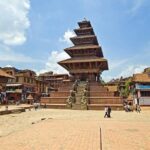
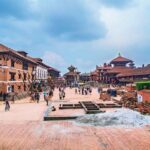
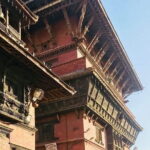
After the hilltop, the day shifts into craftsmanship and royal-era architecture at Patan Durbar Square, also known as Lalitpur’s Durbar Square. You’ll have around 2 hours here, and it’s one of the best ways to understand Kathmandu Valley’s Newar heritage without needing a textbook.
What I like about this stop is that it rewards slow looking. The square is known for stunning Newar architecture, and the layouts make it easier to notice patterns—carvings, courtyards, and the way temple and palace elements blend. It also gives you a break from the more open, stupa-centered feeling of Swoyambhunath and Boudhanath.
Another reason this stop is a smart mid-tour choice: you’re not only “seeing a place.” You’re learning how the culture expresses itself in stonework and design. If you enjoy photos, Patan also gives you angles that feel less repetitive than some other heritage squares.
If you’re short on patience for crowds, this is still manageable. There’s enough time to step back, wait for a quieter moment, and get your shots without feeling like you’re speed-running history.
Boudhanath Stupa: one of the best places to feel the Buddhist pulse
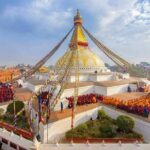
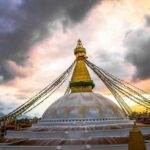
Next up is Boudhanath Stupa, one of Nepal’s largest and most important Buddhist stupas. You’ll spend about 2 hours here, and that duration is key: a stupa like this isn’t a “look and leave” spot.
Boudhanath works well because the space encourages motion and ritual. You’ll see people circling, pausing, and returning. Even if you don’t know the meanings of every gesture, you’ll feel the rhythm of devotion. This is the kind of stop where your mind slows down, even when your feet are still walking.
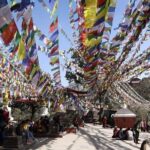
Practical photo advice: aim for both wide views and close details. The stupa’s scale is impressive from afar, but the texture of prayer flags, the surrounding architecture, and the flow of visitors can be just as photogenic up close.
One drawback to consider: Boudhanath is popular. If you want a quiet moment, you’ll likely need a little patience. With 2 hours, you can usually find a comfortable spot and wait out the busier stretches.
A few more Kathmandu tours and experiences worth a look


Pashupatinath Temple: Hindu sacred intensity in the heart of the city
The day’s emotional peak for many people is Pashupatinath Temple, dedicated to Lord Shiva on the Bagmati River. You’ll have about 2 hours here, and it’s enough time to understand why it’s so significant without turning it into a checklist.
Pashupatinath is a UNESCO World Heritage Site and holds immense spiritual importance for Hindus. That’s not marketing fluff—it changes the atmosphere. You’re not just walking around monuments. You’re entering a working spiritual center where worship and ritual life happen around you.
Respect and awareness matter most here. Keep your voice down, move with purpose, and avoid blocking sightlines for those who are observing or praying. If you’re unsure where to stand, follow your guide’s lead—guides usually know where visitors can safely pause.
It’s also one of those places where you’ll remember little things: how people approach steps and platforms, the way the river area is used, and how the temple complex frames the surrounding space. If you like cultural experiences that feel real rather than staged, this is the stop that delivers.
Patan beyond the Durbar Square: how extra temple visits can fit your interests
This tour isn’t limited to just one royal square and one stupa day. The overall plan for Patan can include additional religious sites and temples such as:
- Mahaboudha Temple
- Kumbeshwor Temple
- Krishna Temple
- Golden Temple
You might find that these extra stops depend on what fits your pace and what your group wants to focus on. The tour is described as flexible, and the idea is to give you a Kathmandu Valley overview while still letting your day feel personal.
Why this matters: if you’re the type who wants more than one “big photo spot,” these additions can make the day feel less like a sprint. And if you prefer less walking, you can usually adjust your time and focus—especially since this is set up with personal service in mind.
What’s included (and why that changes the real cost)
Let’s translate the $95 into real-world value. Included features are:
- Hotel pickup and drop-off
- Private transportation
- Experienced English-speaking tour guide
- Bottled water
- Parking fees
- Government tax and service charge
That’s a lot of the stuff that quietly inflates the cost on other tours. Pickup and transport alone can add up fast in Kathmandu traffic, and parking/fees are often something you don’t want to think about mid-day.
What’s not included:
- UNESCO World Heritage site entry fees
- Personal expenses, food, drinks, etc.
So your true “all-in” budget depends on the site admissions you end up paying. The good news is that the core itinerary is heritage-heavy, which usually means clear signage and straightforward ticketing once you arrive. The bad news is simply math: plan a little buffer so you’re not surprised.
My advice: when you budget, assume you’ll pay some UNESCO-related admissions. If you’re traveling with a phone that can handle offline maps and tickets, even better—but don’t count on everything being digital.
Your guide can make or break a heritage day
The tour emphasizes an English-speaking guide and small-group service. That’s not fluff. On a day packed with sacred landmarks, your guide helps you do two things:
1) understand what you’re looking at, and
2) avoid wasting time guessing where to stand and what to notice.
The kinds of guide strengths that get called out include being informative and making the itinerary feel flexible. Names that show up include Arjun, Ramesh, Laxman, and Raj—each associated with clear explanations, good pacing, and a willingness to accommodate what a group wants to see.
You’ll get the most out of the day if you arrive with a tiny plan of your own:
- Are you more Hindu-temple curious or Buddhist-stupa curious?
- Do you want photo time, explanation time, or a balance?
- Do you want to move at a calm pace?
Then communicate that early. A small-group setting makes it easier for your guide to adjust.
How to prepare so your feet and photos don’t suffer
A heritage day in Kathmandu is rewarding, but you’ll walk. Bring shoes you trust. Temple steps can be uneven, and surfaces can be slippery in certain areas.
Also:
- carry a light layer (temples can feel cool/shaded compared to the street)
- keep water handy (you’ll have bottled water on the tour)
- expect some stairs and hills, especially with Swoyambhunath’s hilltop
If you care about photos, start thinking about angles. Hilltop sites reward early movement. Riverfront and courtyard areas reward patience. And a stupa like Boudhanath rewards both wide shots and detail shots.
Finally, keep your phone charged. Heritage stops make it easy to burn battery with constant camera use.
Is this tour for you? Who will enjoy it most
This experience is ideal if:
- you have limited time in Kathmandu Valley and want major sites in one day,
- you’d rather pay for logistics (pickup, transport, guide) than spend your energy figuring it out,
- you like cultural context, not just “stand here, take photo” travel.
It’s also a good option if you want a practical baseline before you choose more niche experiences. After this day, you’ll have a clearer sense of which neighborhoods and sacred spaces you want to revisit.
You might want to look at something else if you’re expecting a slow, half-day experience with no ticket costs added. Since UNESCO site entry fees aren’t included, your day may feel less predictable on your budget unless you plan for that.
Should you book the Kathmandu Full Day City Tour?
Yes, if you want a well-structured introduction to Kathmandu Valley’s spiritual core without stressing over routing. The biggest reasons to book are the pickup/drop, the private transport, and the fact that the itinerary centers on the most important heritage landmarks—Swoyambhunath, Patan Durbar Square, Boudhanath, and Pashupatinath—with time that actually lets you look.
Before you hit confirm, do two quick checks:
1) budget for UNESCO entry fees since they’re not included, and
2) pick the departure time that matches your energy level—morning or afternoon—so you’re not touring temples while running on empty.
If that sounds like your kind of day, this tour is a strong way to get oriented fast and see the Kathmandu Valley that people talk about for good reason.
FAQ
How long is the Kathmandu Full Day City Tour?
It runs for about 7 hours (approx.).
What’s the meeting point for the tour?
The tour starts at Adventure Bound, Bahati Pokhari, Kathmandu 44600, Nepal.
Does the tour offer hotel pickup and drop-off?
Yes, hotel pickup and drop-off are included.
Is admission to UNESCO World Heritage sites included?
No. UNESCO World Heritage site entry fees are not included.
What are the main stops on the itinerary?
The listed stops are Swoyambhu Mahachaitya (Swoyambhunath), Patan Durbar Square, Boudhanath Stupa, and Pashupatinath Temple.
Can I choose a morning or afternoon departure?
Yes. You can choose morning or afternoon departures, and there are several departures throughout the day.
What’s included in the price besides the tour itself?
Included items are private transportation, an experienced English-speaking guide, bottled water, parking fees, and government tax and service charge.
Is this a private tour or a shared group tour?
It’s listed as a private tour/activity, meaning only your group participates.
What start time is shown for the tour?
The start time shown is 9:15 am.
What’s the cancellation policy?
Free cancellation is available up to 24 hours before the experience starts for a full refund. If you cancel less than 24 hours before, the amount paid is not refunded.