REVIEW · KATHMANDU
Private Full-Day Tour of Kathmandu Valley With World Heritage Temples and Patan
Book on Viator →Operated by Unique Adventure International Pvt. Ltd. · Bookable on Viator
Big shrines, private guiding, real rhythm.
This day tour links UNESCO sites across Kathmandu Valley with a Patan stop, so you get temples that feel alive with daily Hindu and Buddhist practice. I like the private setup (just your group, with a dedicated guide) and the fact that entrance fees are included, so the day stays smooth.
There is one trade-off to plan for: it runs about 7 to 8 hours, and some stops involve hills, steps, and time in crowds—plus a few sites are still in post-2015 reconstruction mode.
In This Review
- Key highlights at a glance
- Why This Kathmandu Valley + Patan Tour Feels Like the Right Length
- Entering Swayambhunath (Monkey Temple) With Hill-Top Views
- Patan Durbar Square: Temples, Metalwork, and the City With Many Roofs
- Boudhanath Stupa: Watching Prayer at One of the World’s Biggest Shrines
- Pashupatinath Temple on the Bagmati River: Ritual Life and Funeral Ghats
- Lunch Near Boudhanath: Plan It Like Part of the Tour
- Price and Value: What $107 Buys You (and What It Doesn’t)
- Smart Planning for a 7 to 8 Hour Day
- How the Guides Make or Break This Tour
- Who This Private Kathmandu Valley + Patan Tour Is Best For
- Should You Book This Tour?
- FAQ
- How long is the Kathmandu Valley and Patan private tour?
- What time does the tour start?
- Is this a private tour or a shared group?
- Which main sites are included in the day?
- Are entrance fees included?
- Is lunch included?
- Do you pick me up from my hotel?
- What dress code should I follow?
- Will I see any earthquake reconstruction during the visit?
Key highlights at a glance
- Swayambhunath (Monkey Temple) views first, with an easy start that sets the mood for the whole valley circuit
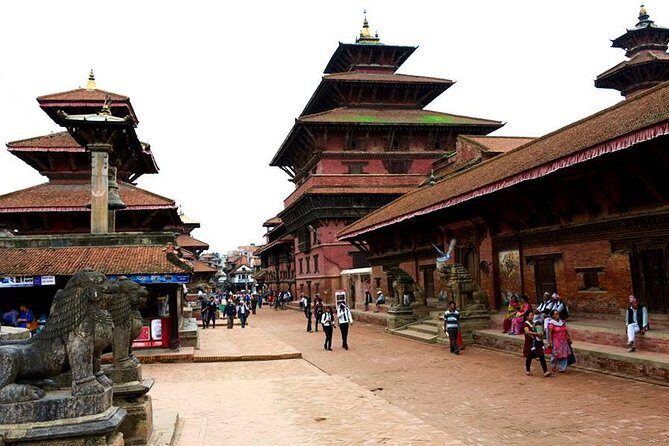
- Patan Durbar Square craft-and-temple focus, from the Golden Temple complex to Krishna Mandir
- Boudhanath Stupa viewing time, so you can slow down and watch prayer without rushing
- Pashupatinath on the Bagmati River, including the real-world drama of bathing rituals and funeral ghats
- Guides by name and style: past groups have been led by people like Rohit, Noor, Khum, and Ram
Why This Kathmandu Valley + Patan Tour Feels Like the Right Length
A full-day Kathmandu Valley circuit is the best use of limited time. You get multiple UNESCO stops without the stress of figuring out routes, timing, or entry fees. The private guide also matters here: at places like Swayambhunath and Pashupatinath, the meaning is in the details—chants, symbols, and how people move through the space.
I also like that the tour is built for practical comfort. Transport is in a private, air-conditioned car or van, and pickup is offered from central Kathmandu. That helps a lot when morning traffic is chaotic and you’d rather not spend the first hours negotiating with taxis.
One more value point: the itinerary is tight enough to cover the big classics—Swayambhunath, Boudhanath, Pashupatinath—then rounds it out with Patan Durbar Square. It’s not just temples as checkboxes. It’s the Kathmandu Valley’s two faith worlds (Hindu and Buddhist) shown side by side in one day.
You can also read our reviews of more private tours in Kathmandu
Entering Swayambhunath (Monkey Temple) With Hill-Top Views
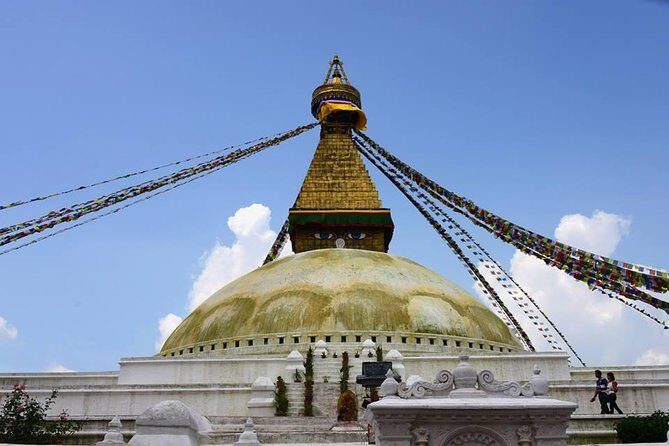
You start at Swoyambhunath (Swayambhunath Mahachaitya), often called Monkey Temple. The site is on a hill west of Kathmandu, and it’s believed to be over 2,000 years old. That age matters because you’re not seeing a modern viewpoint platform—you’re stepping into a shrine that long ago became part of how this city sees itself.
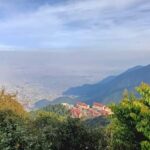
What makes this stop work early: you get the panoramic views of Kathmandu Valley from the peak. Even if you are not a “big view” person, this is the stop that gives you orientation. Once you’ve seen the valley from above, the rest of the day feels easier to place in your mind.
Expect the Monkey Temple experience to be physical in a normal way. You’ll climb up, move through crowds, and spend time looking up and around. If you have strong physical fitness, this is a good fit. If not, plan on taking slow breaks.
A final consideration: some sites in this region were damaged by the April 25, 2015 earthquake and are still under reconstruction. At places like Swayambhunath, that can mean scaffolding or restoration activity in peripheral areas. It doesn’t erase the magic—it just changes the look.
Tip for your day: wear grippy shoes. You’ll be walking on uneven ground, and the climb is part of why the views are worth it.
Patan Durbar Square: Temples, Metalwork, and the City With Many Roofs
After Swayambhunath, the route shifts to Patan, often described as the city with a thousands roofs and fine arts. Patan’s reputation as a place of craftspeople and metal workers shows up in the details around the square. This stop feels different from the stupa and river temples because it’s more about dense architecture and art.
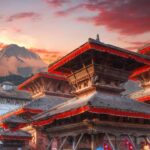
At Patan Durbar Square, you can expect to see major temple highlights including Krishna Mandir and the Golden Temple, plus other notable shrines such as the Bhimsen Temple and Jagan Narayan Temple. The tour also includes stops like Manga Hiti and Bishwanath Temple.
Why I think this part is a smart move: Patan gives you “temple craft as a living skill.” Even when you know the names of UNESCO sites, you don’t fully understand Nepal’s design language until you see how many monuments share a tight space. The square is also a great place to ask your guide what the symbols mean and how worship differs from stop to stop.
Time is set at about 1 hour. That’s enough to get the big images and understand the layout, but it’s not enough to linger at every corner if you’re the type who wants photos from every angle. If you love architecture, you may wish you had more time. If you prefer a guided overview, one hour is exactly right.
Practical note: Patan can be busy, especially if your visit overlaps with other tour schedules. A private guide helps you keep moving without feeling rushed.
Boudhanath Stupa: Watching Prayer at One of the World’s Biggest Shrines
Next comes Boudhanath Stupa, described as one of the biggest Buddhist shrines in the world. This is your “slow down” moment. The tour gives you about 2 hours here, which is important. Stupas like this aren’t meant to be absorbed in ten minutes.
What you’re really seeing is a choreography of faith: people walking around the stupa, families gathering, monks and devotees moving through the space with purpose. Even if you don’t know all the terminology, the setting tells you what matters—repetition, devotion, and community.
I also like the rhythm of this stop in the day plan. It sits between the palace-and-royal architecture feel of Patan and the heavy spiritual intensity of Pashupatinath. Boudhanath is intense in its own way, but it’s calmer than the cremation ghats you’ll see later.
Lunch is planned near Boudhanath. The tour does not list lunch as included, so you’ll use this stretch to eat on your schedule, close to where you already are.
If you’re sensitive to crowd levels, Boudhanath can feel packed at peak hours. The upside: having 2 hours helps you find moments to pause and get photos that aren’t pure chaos.
Pashupatinath Temple on the Bagmati River: Ritual Life and Funeral Ghats
Then you reach Pashupatinath Temple on the Bagmati River. This is the emotional anchor of the itinerary. The temple is home to Nepal’s most famous Hindu temple, and the river-side setting is part of why people come.
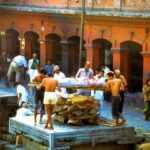
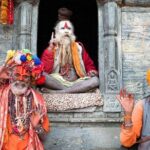
The tour includes time to observe key scenes: Hindu holy men (sadhus) and pilgrims doing ritual bathing, with occasional funeral pyres burning on the ghats. The cremation site is used by the royal family and also by local people from nearby communities.
This is not a theme-park stop. It’s real life, and it can feel intense even if you’re used to travel. If you’re uncomfortable with death rituals, it’s smart to mentally prepare. At the same time, if you want to understand how Hinduism functions beyond ceremonies—how belief shows up daily—Pashupatinath is one of the strongest places in Kathmandu.
The tour allocates about 2 hours here, which helps. You can watch, step back, and take breaks rather than rushing past. And a good private guide makes a difference because you can ask what you’re seeing and why it happens.
Simple practical advice: dress respectfully and keep your camera and body language in check. This is an active religious space with pilgrims moving through it.
You can also read our reviews of more historical tours in Kathmandu

Lunch Near Boudhanath: Plan It Like Part of the Tour
Lunch is a frequent headache on full-day tours—either it’s long and slow, or it’s somewhere far away. Here, lunch happens near Boudhanath Stupa, which is a win because you don’t lose time in transit.
But again, lunch itself is not listed as included. That means you’ll pay for your meal, and you’ll want to have a budget-ready mindset. Drinks are also not included, so if you drink more than the occasional bottle, plan ahead.
I’d treat this like a flexible scheduling block. If you feel tired, eat something light and keep moving. If you want a proper meal, use your time while you’re already in the Boudhanath area so you’re not “saving lunch” for later while your day runs hot.
Price and Value: What $107 Buys You (and What It Doesn’t)
At $107 per person, the pricing looks reasonable if you compare what’s included: a private professional guide, a driver, private air-conditioned transport, and entrance fees for the listed sights.
Where value shows up most is in the guide + entry-fee combination. In a city like Kathmandu, going in without local knowledge can cost you time. With a guide, you get context that makes the sites make sense faster. And entrance fees included means you’re not piecing together tickets and rules at each location.
What you should mentally subtract: lunch and drinks are not included. Also, “pickup offered” is a little different from broad hotel pickup. The tour says hotel pickup and drop-off are not included, even though pickup from central Kathmandu is offered. So if you’re staying outside the central area, you may need to confirm exactly where pickup happens.
Also, note that the tour is private, meaning the vehicle and guide are for your group. If you’re traveling with family or friends, that can be a strong value move.
Smart Planning for a 7 to 8 Hour Day
This tour runs about 7 to 8 hours starting at 8:15 am. That timing matters because early hours help you get calmer moments at the hilltop site and reduce the worst of the late-morning crush.
You’ll also need to handle the physical reality of the day. The tour notes that you should have strong physical fitness level. That’s not just marketing. Between Swayambhunath’s hill approach and the movement between sites, you should expect walking, stairs, and standing time.
Dress code is smart casual. In practice, that means comfortable, respectful clothing. You’ll be in places of worship, so keep it modest and avoid anything that makes you look out of place.
One more logistic detail that can affect comfort: some areas are in reconstruction after the 2015 earthquake. That can influence how you walk, what areas are temporarily blocked, and which paths you take for views and access.
How the Guides Make or Break This Tour
This is one of those tours where the guide is not a “nice extra.” It’s part of the product. Past groups have been led by guide names like Rohit, Noor, Khum, and Ram, and the common thread is helpfulness: being there on time, explaining what you’re looking at, and adjusting pace when shopping or slower moments happen.
I also like that some guides are described as patient in the small moments—time to move through busy areas without making you feel hurried. If you enjoy temple photography or you want time to ask questions instead of just marching through, a patient guide can turn a standard day into a more personal one.
There’s also mention of real-world support, including advice that helps people avoid sketchy situations. That kind of practical street smarts matters in cities where there can be pressure to buy or commit on the spot.
Who This Private Kathmandu Valley + Patan Tour Is Best For
This tour fits well if you want a one-day UNESCO mix without bouncing between neighborhoods by yourself. You’ll like it if you care about the contrast between Buddhist and Hindu sacred sites—especially if you want more meaning than just photos.
It’s also a strong option for:
- First-timers who want a clear, guided overview of Kathmandu Valley
- Families and small groups who prefer a private pace rather than a long group bus day
- Travelers who appreciate a guide who can explain what rituals are and what you’re seeing
It may not be ideal if you’re easily overwhelmed by crowds or uncomfortable with the intensity of cremation ghats at Pashupatinath. Prepare for that emotional weight and you’ll get more out of the day.
Should You Book This Tour?
If you’re choosing between a self-guided plan and paying for a private guide, I’d lean toward booking this. The combination of UNESCO sites in one route, entrance fees included, and a private vehicle makes it easier to spend your energy on the places instead of logistics.
Book it if you:
- Want Swayambhunath, Boudhanath, and Pashupatinath in one full day
- Prefer a guide who can translate what you see into context
- Are okay with a 7 to 8 hour walking-heavy schedule
Skip it or plan carefully if you:
- Don’t feel good with crowded sacred sites or hills and stairs
- Don’t want to witness funeral ghats and related rituals
- Need heavy hotel-based pickup beyond central Kathmandu
For most people making their first serious Kathmandu Valley day count, this is a solid, practical choice.
FAQ
How long is the Kathmandu Valley and Patan private tour?
It runs about 7 to 8 hours.
What time does the tour start?
The start time is 8:15 am.
Is this a private tour or a shared group?
It is private, meaning only your group participates.
Which main sites are included in the day?
You visit Swayambhunath (Monkey Temple), Patan Durbar Square, Boudhanath Stupa, and Pashupatinath Temple.
Are entrance fees included?
Yes, entrance tickets/fees for the listed sites are included.
Is lunch included?
Lunch is not included, but the plan includes time to have lunch near Boudhanath Stupa.
Do you pick me up from my hotel?
Pickup is offered from central Kathmandu, but hotel pickup and drop-off are listed as not included.
What dress code should I follow?
The dress code is smart casual.
Will I see any earthquake reconstruction during the visit?
Some sites on the tour were damaged by the April 25, 2015 earthquake and are in a phase of reconstruction.