REVIEW · KATHMANDU
Private Kathmandu Day Tour – UNESCO World Heritage Sites
Book on Viator →Operated by Rising Adventure Pvt. Ltd. · Bookable on Viator
Kathmandu’s sacred sites in one tidy day. This private loop through Swayambhunath, Pashupatinath, Boudhanath, and Kathmandu Durbar Square is a smart way to see big contrasts without spending all day figuring out transport. I like that the stops are built for variety—Buddhist hilltop views, a Shiva temple complex, and a Tibetan stupa—so you’re not stuck in one style of worship. I also like the practical setup: hotel pickup/drop-off plus an air-conditioned vehicle keeps the day comfortable in Kathmandu traffic.
The main drawback is usually simple and budget-related: monument entrance fees aren’t included, so plan for the NPR 2600 (about USD 21) ticket cost before you go in. You’ll also want your guide to keep timing tight, since the total day runs about 6 hours.
In This Review
- Quick highlights
- Why this 6-hour Kathmandu Valley loop works
- Swayambhunath Monkey Temple: prayer wheels and Buddha looking west
- Pashupatinath pagoda-style Shiva temple complex: silver doors and carved stone
- Boudhanath Stupa: Tibetan culture, UNESCO listing, and post-2015 rebuilding
- Kathmandu Durbar Square: royal residence turned living museum
- Price and logistics: what $45 really covers
- Who should book this private UNESCO World Heritage day tour
- Should you book this Kathmandu Valley day tour?
- FAQ
- How long is the Private Kathmandu Day Tour?
- What stops are included in the tour?
- Is pickup and drop-off included?
- Is the entrance fee included in the tour price?
- Are food and drinks included?
- What transportation do I use during the tour?
- Is this a private tour?
- Do I get a ticket on my phone?
- Can I cancel for free?
- Is the tour suitable for most people?
Quick highlights
- Hilltop Swayambhunath: prayer-wheel base, plus the huge Shakyamuni Buddha image on the western pedestal
- Pashupatinath’s pagoda design: four silver doors, golden roof, and carved wood details in a major Shiva temple zone
- Boudhanath’s UNESCO draw: a spherical Tibetan stupa in the northeast with renovation after the 2015 earthquake
- Kathmandu Durbar Square: royal-era courtyard feel, with major temple-and-art work from the 15th to 18th centuries
- Private pace with local expertise: licensed guide service, and flexibility noted with guides like Kamil in similar UNESCO-day planning
Why this 6-hour Kathmandu Valley loop works
You’re buying a focused day, not a slow sightseeing marathon. At about 6 hours, this tour hits the big spiritual anchor points of the Kathmandu Valley while still leaving enough time for photos, respectful wandering, and a bit of breathing room between sites.
The value is in the logistics. With an air-conditioned vehicle and hotel pickup/drop-off, you avoid the most annoying part of Kathmandu sightseeing: time-wasting transfers and hunting for the right route. Add a licensed, experienced guide, and you get the context that makes all those temples make sense fast—why they’re built the way they are, what symbols mean, and what to notice as you walk.
That said, this is a “see and soak it in a bit” schedule. If you’re the type who likes to linger for an hour inside every corner shrine, you may feel a little rushed—especially because entrance tickets are separate and can add a few minutes of waiting.
You can also read our reviews of more private tours in Kathmandu


Swayambhunath Monkey Temple: prayer wheels and Buddha looking west
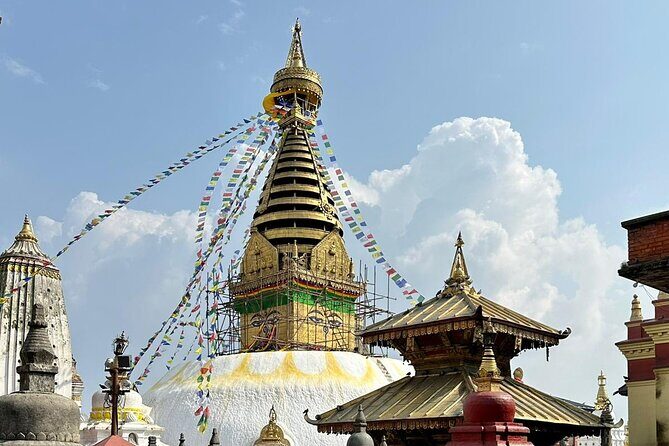
Swayambhunath is the kind of place you understand the moment you arrive: a hilltop temple zone full of stupas, shrines, and small details that reward slow walking. It’s also famous for the monkeys, so keep an eye on your bag and any loose items (and yes, they can move fast). You’ll spend about 1 hour here, which is enough time to get oriented and walk the main areas without feeling like you timed-traveled all day.
A few standout things to watch for:
- The stupa base is surrounded by prayer wheels. Even if you don’t know the ritual, you can see the design language: devotion built into daily movement.
- Look toward the western side for the largest image of Shakyamuni Buddha on the pedestal. It’s the kind of landmark your eyes find even when you’re busy reading the rest of the scene.
- The hill isn’t just one building. Buddhist shrines, chaityas (small shrine forms), and even some Hindu deities are arranged from the bottom up, so the walk feels like a vertical collection of sacred architecture.
- There’s also a small pond on the site, which adds a calmer pocket to the bustle around the stupa paths.
Practical tip: dress and behave like you’re visiting a living religious site. It’s crowded, so plan for short stops to take photos and then move on before you block other people.
What you’ll love most here is how Swayambhunath feels layered. It’s Buddhist in core identity, but the mix of symbols and shrines makes the Kathmandu Valley spiritual picture feel interconnected instead of separate.
Pashupatinath pagoda-style Shiva temple complex: silver doors and carved stone
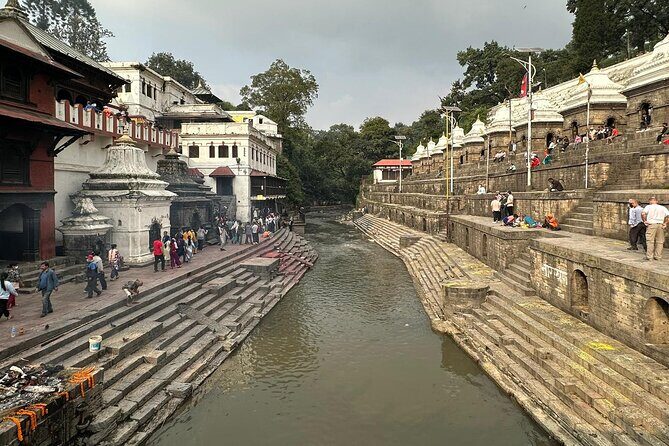
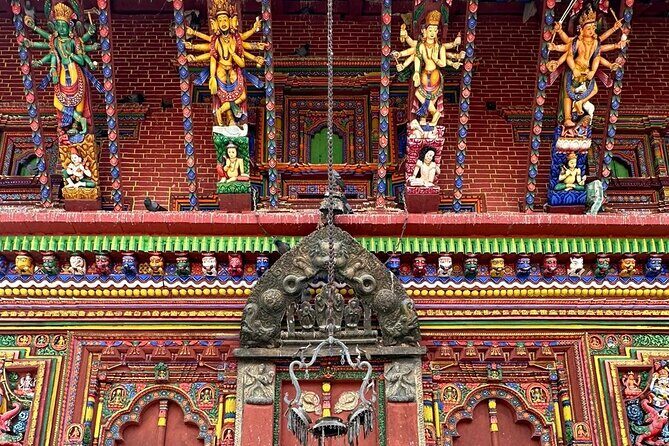
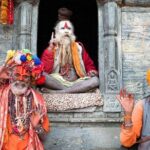
If Swayambhunath is the hilltop welcome, Pashupatinath is the main headline. This is Nepal’s greatest Hindu temple in the sense that it carries a huge gravity in the Shiva tradition. Expect about 2 hours at this stop, and plan to slow down—this isn’t a place to rush through like a checklist.
What makes Pashupatinath visually unforgettable is its architectural style. The temple is built in a pagoda style, with:
- four silver doors
- a golden roof
- and wood carving details that you can spot up close if you position yourself well
Then there are the sacred structures around it. Pashupatinath is surrounded by:
- almost 15 shrines of Lord Shiva (Shivalaya),
- 452 temples,
- and 12 phallic shrines tied to jyotirlinga tradition
You also have Guheswori Temple in the Pashupatinath area, associated with Lord Shiva’s consort. That matters because it adds another layer beyond the main sanctum—more of the Shiva ecosystem, not just one single door and done.
One consideration: Pashupatinath is visually dense. With 452 temples and many surrounding shrine areas, it can feel like information overload if you don’t have guidance. A good guide helps you pick what’s worth your attention in the moment—especially if you want to understand why a particular shrine or symbol is there.
If you’re coming from a Buddhist-focused day like Swayambhunath, switching into the Shiva temple complex is a meaningful shift. You see the same region, same city rhythm, but a different spiritual language.
Boudhanath Stupa: Tibetan culture, UNESCO listing, and post-2015 rebuilding
Boudhanath Stupa is one of the best places in Kathmandu to feel Tibetan culture without needing a long trip out of the city. You’ll spend about 1 hour here, and that time is usually enough to walk the stupa perimeter, watch worshippers, and take in the huge circular form.
This stop has an extra layer of meaning because of the 2015 earthquake. The ancient stupa was devastated in April 2015, and the renovation is completed now. The renewed structure is treated as one of the largest Tibetan stupas in Nepal, and it’s enlisted as a UNESCO World Heritage Site.
Look closely and you’ll notice why the stupa works so well as a cultural center:
- Its spherical structure is visually powerful and easy to photograph from multiple angles.
- It’s located on the northeastern outskirts of the Kathmandu Valley, surrounded by Tibetan settlements.
- It functions as a center point of Tibetan culture in Nepal.
- You may also see connections to thank(a) production, since the area is popular for that craft.
If you like your spiritual travel to include art and everyday life, Boudhanath tends to deliver. Even if you don’t plan to buy anything, you’ll see how faith, craft, and community fit together.
Practical tip: expect foot traffic around the stupa and a steady stream of people circling it. Give folks room, keep your camera steady, and don’t rush through the quieter side streets leading to the perimeter.
Kathmandu Durbar Square: royal residence turned living museum
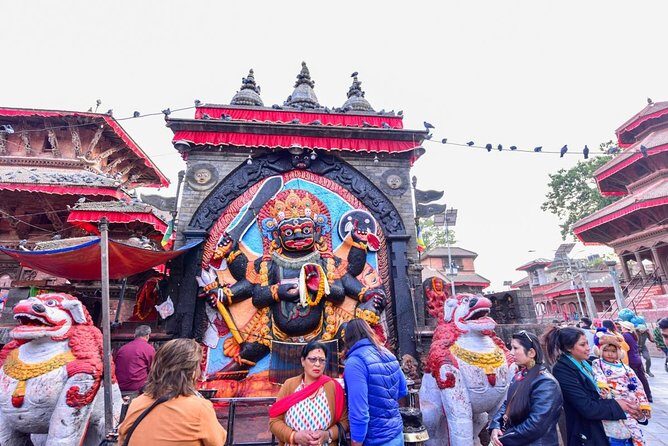
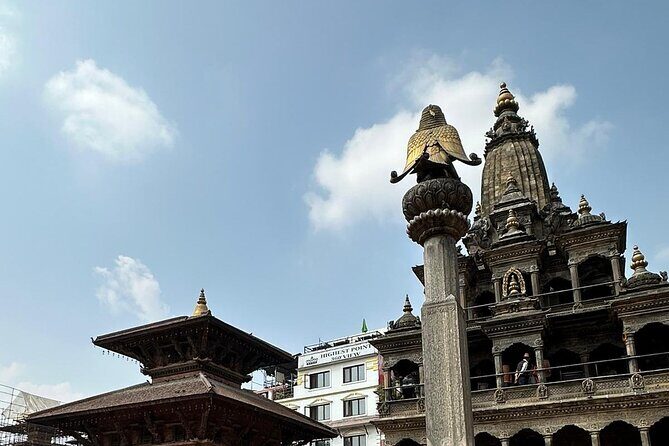
Finish with Kathmandu Durbar Square, and the day starts to feel like history you can actually walk through. This is in the heart of Kathmandu city near Thamel, so it’s a convenient end point if you want dinner after.
You’ll have about 2 hours here, and that time is important because Durbar Square is more than one viewpoint. It’s a compact “museum without walls,” shaped by centuries of building and rebuilding.
Here’s what gives Durbar Square its pull:
- It was the residence of the Royal Nepalese family until the 19th century, when the coronation of the Nepalese monarch took place.
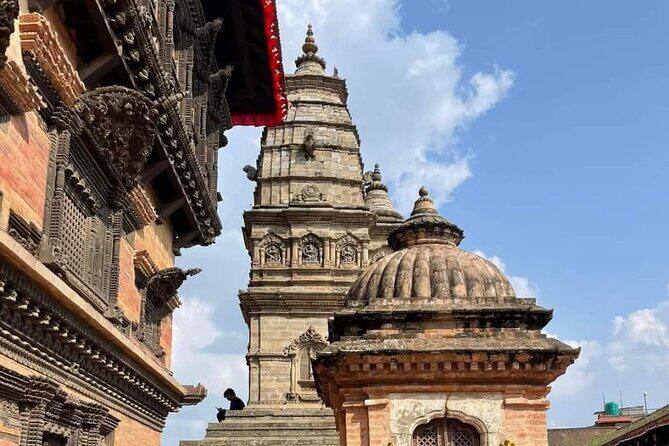
- The area is described as a living museum of temples, with architecture and crafts that span roughly the 15th to 18th centuries.
- Most of the buildings, temples, art, and sculptures date from the medieval period into that early modern stretch, so when you look up, you’re seeing layers.
And yes, it’s also an easy-to-spot landmark: there’s a big Hanuman sculpture in front of Kathmandu Durbar Square. When you’re tired at the end of the day, that kind of reference point helps you keep your bearings.
One small consideration: Durbar Square is very visual and can be crowded. If you want fewer crowds, plan to spend your “photo time” early in the stop and keep your walking pace steady rather than stopping every 10 feet.
You can also read our reviews of more historical tours in Kathmandu

Price and logistics: what $45 really covers
The listed price is $45.00 per person for about 6 hours, and that’s only worthwhile because key items are included:
- Air-conditioned vehicle
- Hotel pickup and drop-off
- Licensed, knowledgeable guide
- Mobile ticket
- Private group only (your group participates)
What’s not included is also very clear:
- Monument entrance fee: NPR 2600 (about USD 21)
- Food and drink
So your total cost is basically the tour fee plus the entrance ticket amount. If you’re budgeting, I’d treat entrance fees as non-negotiable from the start, because they impact your plan the way a train ticket would back home. If you prefer to pay everything up front, this tour is slightly more hands-on for you at the sites.
That said, the value still makes sense if you want a one-day UNESCO-focused route without the stress of coordinating transport between distant neighborhoods. You’re paying for the driver, the guide, and the fact that someone else handles the movement through the city.
Also note the tour includes pickup offered and is near public transportation. That means if your hotel is close to transit, you might still have options—but I’d still count on the pickup as your main convenience.
Who should book this private UNESCO World Heritage day tour
This is a strong fit if you want:
- a balanced mix of Buddhist and Hindu sacred sites in one day,
- a private pace that works for families and couples,
- and a guided route that helps you understand what you’re looking at instead of guessing.
It’s also a good match if you’re staying around Thamel or you want your day to end near central Kathmandu for food and an easy night out.
You might consider something else if:
- you dislike temples and would rather focus on markets or viewpoints,
- you have very limited mobility (the sites involve walking on uneven ground and steps),
- or you want a slow, museum-style visit where every building becomes a half-hour stop.
In short: this is for people who like structure. You’ll get a plan, a guide, and a smooth ride. For independent wandering all day, this isn’t the style.
Should you book this Kathmandu Valley day tour?
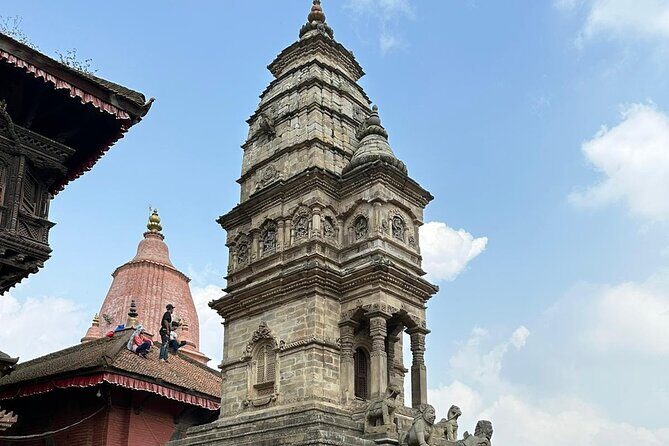
Book it if you want the smartest way to hit Kathmandu’s major spiritual landmarks in one shot. The combination of Swayambhunath’s prayer-wheel base, Pashupatinath’s silver-door pagoda design, Boudhanath’s UNESCO-listed stupa and Tibetan settlement setting, and Kathmandu Durbar Square’s royal-era temple courtyard gives you real variety—without spending your whole day on transit.
Skip it only if the entrance ticket feels like a deal-breaker for your budget or if you’d rather build your own custom route with fewer stops. Otherwise, the setup here is practical: pickup, air-conditioned comfort, a licensed guide, and enough time at each stop to see the main ideas and move on without feeling like you lost the day.
FAQ
How long is the Private Kathmandu Day Tour?
It’s about 6 hours long.
What stops are included in the tour?
The tour includes Swayambhunath, Pashupatinath Temple, Boudhanath Stupa, and Kathmandu Durbar Square.
Is pickup and drop-off included?
Yes. Hotel pickup and drop off are included, and pickup is offered.
Is the entrance fee included in the tour price?
No. Monument entrance fees are not included, and the listed fee is NPR 2600 (about USD 21).
Are food and drinks included?
No. Food and drink are not included.
What transportation do I use during the tour?
You’ll travel in an air-conditioned vehicle.
Is this a private tour?
Yes. It’s a private tour/activity, and only your group will participate.
Do I get a ticket on my phone?
Yes. The tour includes a mobile ticket.
Can I cancel for free?
Yes, free cancellation is available. You can cancel up to 24 hours in advance for a full refund.
Is the tour suitable for most people?
The tour notes that most travelers can participate.