REVIEW · KATHMANDU
Private Kathmandu UNESCO Heritage Sites with Narayanhiti Museum
Book on Viator →Operated by Himalayan Social Journey · Bookable on Viator
Six UNESCO stops in one taxi day. This private Kathmandu loop ties together major Buddhist and Hindu landmarks, from a 2600-year-old stupa view over the valley to Pashupatinath’s sacred temple grounds and Bouddhanath’s Tibet-linked stupa. I like the private transportation with an English-speaking licensed guide, and I also like how the route gives you a practical overview without wasting hours bouncing between locations. One thing to keep in mind: entrance fees and lunch aren’t included, so you’ll want to budget a bit extra on top of the $75 price.
This is a private tour, so it’s just your group. You also get a mobile ticket, plus pickup is offered, which helps a lot when you’re trying to keep your Kathmandu day organized. From real customer notes, the driving is handled confidently on narrow lanes, and the vehicle may be modern and air-conditioned—nice when the city heat kicks in.
The schedule is packed: roughly 7 to 8 hours covering six stops. That can feel like a full-day culture sprint (in a good way), but plan for a slower pace if you tend to need extra time at museums or photo stops.
In This Review
- Key highlights you’ll notice right away
- Price and logistics: what $75 buys in Kathmandu
- Swayambhunath: a 2600-year-old stupa with the valley in view
- Pashupatinath Temple: Hindu pilgrimage energy by the river
- Bouddhanath (the Buddha Stupa): where Tibet-linked devotion shows up clearly
- Patan Durbar Square in Lalitpur: palaces, temples, and the Buddhism-Hindu mix
- Kathmandu Durbar Square: old-city courtyards and temple walls
- Narayanhiti Palace Museum near Thamel: a museum wrap-up close to town
- Guides and transport: why this feels easier than DIY
- Costs to plan for beyond $75
- Pacing: a 7–8 hour loop that works for first-timers
- Who this private Kathmandu heritage tour suits best
- Should you book this Kathmandu UNESCO + Narayanhiti tour?
- FAQ
- What’s included in the tour price?
- Are entrance fees included?
- Is lunch included?
- How long is the tour?
- What stops are included in the itinerary?
- Do I get a private vehicle for just my group?
- Is pickup available?
- Is the tour suitable for most travelers?
- How do I receive the tickets?
- What payment options are available?
Key highlights you’ll notice right away
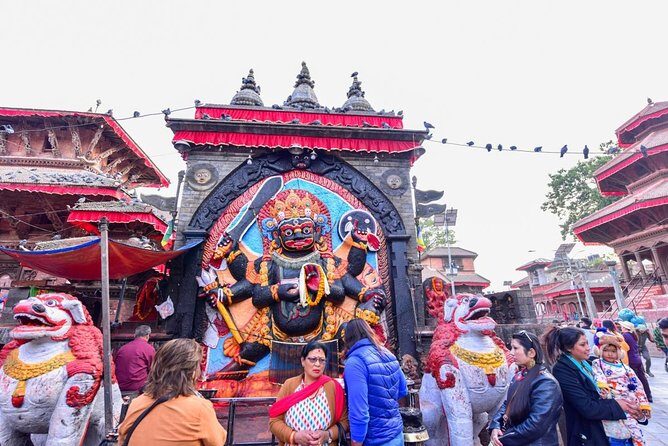
- A tight UNESCO-and-museum combo: Swayambhunath, Pashupatinath, Bouddhanath, Patan Durbar Square, Kathmandu Durbar Square, and Narayanhiti Palace Museum
- English-speaking driver + English-speaking licensed tour guide: clearer context, smoother timing, fewer misunderstandings
- Private taxi with pickup offered: you’re not trying to solve transport between widely separated heritage sites
- Mobile ticket support: less fumbling at the start of the day
- Focus on both Hindu and Buddhist sites: the valley’s religious mix shows up in nearly every stop
- Good pacing for first-time Kathmandu visitors: enough time to see, but not so much that you lose the plot
Price and logistics: what $75 buys in Kathmandu
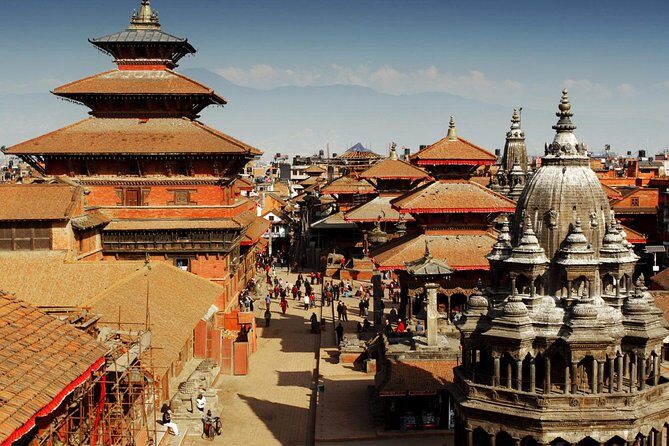
At $75 per person for 7–8 hours, this tour is priced for people who want structure. You’re paying for the practical parts—private transport, a guide, and a planned route—not just the chance to sit in a taxi. That matters in Kathmandu, where getting the “right” ride between heritage zones can quietly eat time (and money).
The itinerary is designed as a valley circuit, moving from hilltop viewpoints down to river-edge temple grounds, then into the two main Durbar Square areas, and ending with Narayanhiti Palace Museum near Thamel. In plain terms: you’ll cover the famous anchors of Kathmandu heritage without needing to piece together multiple trips.
One more logistics point that helps: this is listed as having group discounts and a mobile ticket. If you’re traveling with friends, ask about group pricing when you book, since it’s explicitly part of how they offer the day.
You can also read our reviews of more private tours in Kathmandu


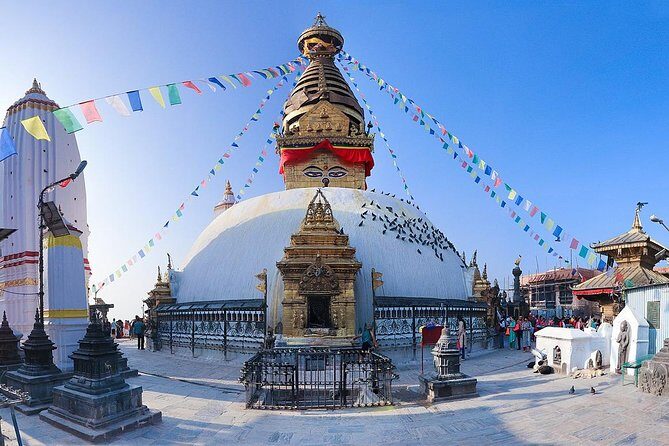
Swayambhunath: a 2600-year-old stupa with the valley in view
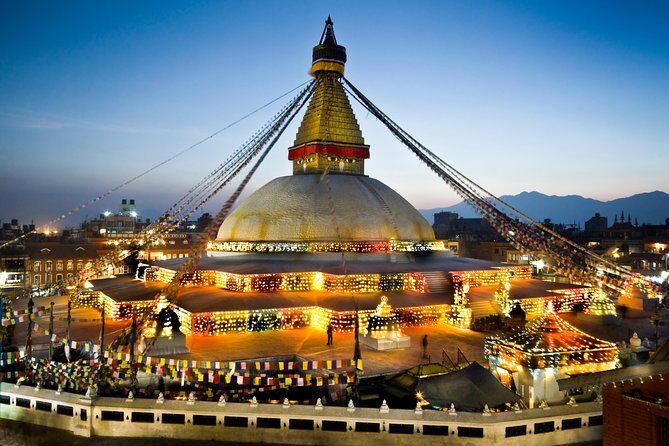
Swayambhunath is one of those Kathmandu landmarks you’ve probably seen in photos, but the scale and the setting are what land. It’s described as a Buddhist stupa about 2600 years old, and it overlooks the Kathmandu valley—so even if you’re not a hardcore temple person, the viewpoint gives you instant orientation.
This stop also has an identity beyond the building itself. The name is associated with self-existent god, and the site is famously nicknamed the Monkey Temple. Even if you’re not chasing wildlife shots, you’ll feel the lively, lived-in character of the area as you move through the complex.
Plan for a solid hour here. That’s enough time to take in the stupa views and the surrounding temple areas without feeling rushed in every direction. Entrance tickets aren’t included, so keep that cost in mind as part of the day’s total.
Pashupatinath Temple: Hindu pilgrimage energy by the river
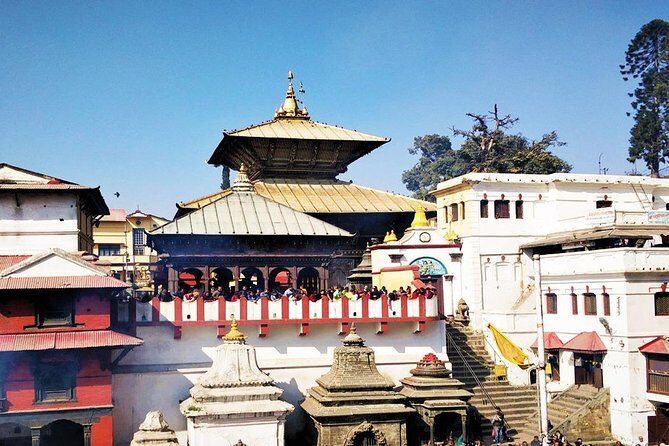
Pashupatinath is a must-know site for anyone trying to understand Hindu worship in Nepal. The name translates to god of animal lives, and the temple welcomes millions of visitors every year. It’s also set on the bank of the Bagmati area, which gives it a very particular “ritual meets city” atmosphere.
What makes Pashupatinath work on a guided tour is context. Without someone to frame what you’re seeing, it can feel like a lot of crowd and architecture in one go. With a guide, you get the meaning behind what’s happening around the temple complex.
You’ll have about an hour at this stop. That’s just right for soaking in the scale and observing the space, but not enough to treat it like a long, slow pilgrimage day. If you want longer time, you’d need to build it into your schedule outside this 7–8 hour structure.
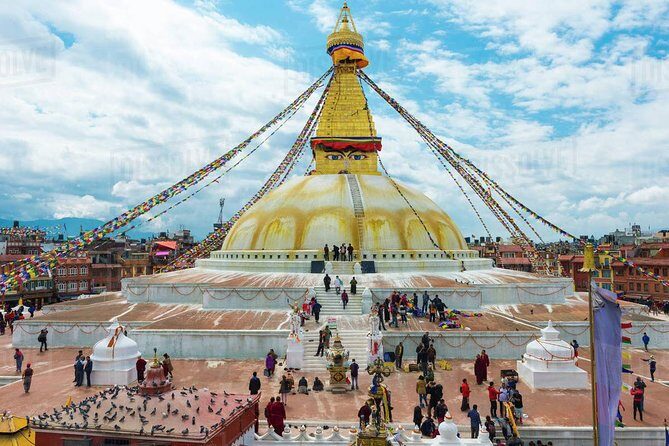
Bouddhanath (the Buddha Stupa): where Tibet-linked devotion shows up clearly
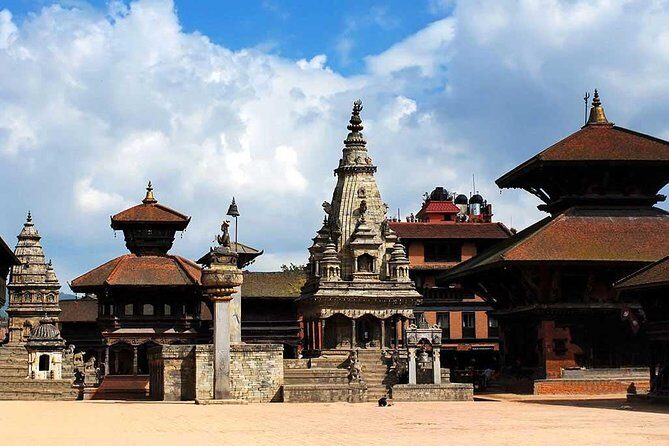
Bouddhanath is often called a stupa associated with wisdom, and the tour describes it as one of the largest stupas in the world. It’s connected to Tibetan Buddhism and is constructed back to the 4th century, which helps explain why so much of the site feels established and ritual-heavy rather than “just scenic.”
The stupa’s most recognizable trait is also built into its design: the shrine resembles a Tibetan-style form, and you’ll notice the iconic steely Buddha eyes mentioned in the tour’s description themes. If you’ve only seen Buddhist sites in textbooks, this one hits differently because it’s clearly a living religious space with visitors and devotion happening in real time.
About one hour is allocated here. That’s enough to understand why Tibet-linked communities care deeply about the place, and to appreciate why the stupa is so big it can feel like the whole square is built around it. Entrance fees aren’t included, so you’ll pay that separately on the day.
Patan Durbar Square in Lalitpur: palaces, temples, and the Buddhism-Hindu mix
Patan Durbar Square (in Lalitpur) is where the tour shifts from single-site icons into a broader “heritage city center” experience. It’s described as a central point offering scenes and beauty prospects, with the added note that the area reflects a fusion of Buddhism and Hinduism.
This stop is also about architecture as a storytelling device. Durbar Squares are more than backdrops: you’re surrounded by palaces, courtyards, and temples that show how power, faith, and daily life tangled together. Even with an hour and a half here, you’ll likely want to keep your camera moving because the details come in layers.
The listed time is 1 hour 30 minutes, which gives you better odds of catching the major parts without turning it into a sprint. Entrance fees aren’t included, so add that to your planning math.
You can also read our reviews of more historical tours in Kathmandu

Kathmandu Durbar Square: old-city courtyards and temple walls
Kathmandu Durbar Square sits in the heart of old Kathmandu city and is surrounded by palaces, courtyards, and temples. This is the other Durbar Square stop, and it’s valuable because it gives you a second viewpoint on the same general theme: how heritage sites function as civic and spiritual centers.
The tour description calls it historic and notes it’s pleasant to visit due to historical significance. That’s a good cue for what to expect: you’re not just looking at a monument; you’re reading the city’s past through buildings and space.
You’ll get about an hour here. That’s enough to move through the key courtyard areas with a guide explaining what you’re seeing, but not enough to slow-walk every corner. If you’re the type who loves doors, carvings, and inscriptions, you might want to spend extra time later in the day on your own—after this tour finishes.
Narayanhiti Palace Museum near Thamel: a museum wrap-up close to town
Ending with Narayanhiti Palace Museum is a smart move. After temple and square viewing, a museum stop helps you translate what you’ve seen into a timeline and a clearer narrative about modern Nepal’s history. The tour describes it as a public museum in Kathmandu, located east of Kaiser Mahal and next to Thamel.
That location matters for practical reasons: it’s close to the area many people use as a base. So when your tour wraps, you’re not stuck on the other side of Kathmandu with no easy way to get dinner or plan your next day.
Time here is listed as about one hour. That’s a good length for catching the main exhibits without turning the day into a marathon. As with other stops, entrance fees aren’t included, so expect to pay separately.
Guides and transport: why this feels easier than DIY
This is the part that turns a list of landmarks into a smoother day. The tour includes an English-speaking licensed tour guide and an English-speaking driver, which reduces the friction that often comes with heritage touring in a busy city.
In customer feedback, guides named Dipendra and Deependra are mentioned as especially strong. The common thread is clear: they explained details without dragging the day out, and they were patient with questions and pacing. When your guide can connect what you see at Swayambhunath or Bouddhanath to the larger cultural logic, the whole route clicks.
The driving also gets credit. Notes mention a smooth experience while navigating narrow lanes. In Kathmandu, that’s not a small detail. It affects how relaxed you feel between stops, which is half the battle on a packed itinerary.
One note for your planning: the tour is private, so your timing is more controlled than a big group bus. That’s ideal if you like to ask questions, slow down for photos, or keep one person from being left behind in a crowd.
Costs to plan for beyond $75
The price includes private transportation, an English-speaking driver, an English-speaking licensed tour guide, pickup offering, and mobile ticketing. It does not include entrance fees, lunch, or alcoholic and cold drinks.
That means your day’s total will depend on what you pay at each site. Since entrance fees are not included, I suggest bringing cash or making sure you’re ready to pay on arrival, rather than assuming everything is prepaid.
Lunch isn’t included either. One set of feedback included a caution about avoiding a lunch venue if you value your pocket. I’d treat that as a tip to keep control of where and what you eat during the day, rather than letting the schedule push you into whatever option is easiest at that moment.
Pacing: a 7–8 hour loop that works for first-timers
This tour is built for efficient sightseeing: each stop is allocated around an hour, with Durbar Squares getting more time. That schedule helps you avoid the common travel problem where you spend all day traveling and only see the “top layer” of each heritage site.
Still, it’s a full day. If you tend to get tired walking in heat or crowds, build in a little extra patience for transitions. The structure is great for people who want to check the big UNESCO anchors off their Kathmandu list, but it’s not a slow, wandering day.
If you’re combining this with a city evening near Thamel, it makes sense to plan meals after Narayanhiti so you’re not trying to squeeze dinner into the museum stop itself.
Who this private Kathmandu heritage tour suits best
This works especially well if you:
- Want a structured UNESCO heritage overview across Buddhist and Hindu sites in one day
- Prefer a private taxi setup with an English-speaking licensed guide
- Are based in Kathmandu and want pickup plus a clear route
- Want the museum ending close to Thamel for an easy transition back to restaurants and shops
It’s also a good choice if you’re traveling with family or friends who need a comfortable pace. Because it’s private, the guide can generally respond to your group’s rhythm more than a large tour group can.
If you prefer to wander alone without a set route, this may feel too planned. But if you want the “get it done, understand it, then enjoy Kathmandu” approach, this fits.
Should you book this Kathmandu UNESCO + Narayanhiti tour?
I’d book it if you want a day that’s organized, guided, and realistic. The big value is not just seeing six famous stops—it’s having English-speaking guidance that helps each site make sense, plus private transport that keeps your energy for the sights.
Two things could steer you away: entrance fees and lunch aren’t included, so you’ll need a budget buffer. And the day is tight, so if you like slow museum time or long photo pauses, you might feel the schedule.
If you’re aiming for a first-time Kathmandu heritage day with a solid payoff, this private UNESCO loop plus Narayanhiti Palace Museum is a strong, practical choice.
FAQ
What’s included in the tour price?
The tour includes private transportation, an English-speaking driver, and an English-speaking licensed tour guide. Pickup is offered, and a mobile ticket is included.
Are entrance fees included?
No. Entrance fees are not included in the tour price.
Is lunch included?
No. Lunch is not included, and alcoholic drinks or cold drinks are also not included.
How long is the tour?
The duration is listed as 7 to 8 hours approximately.
What stops are included in the itinerary?
The tour includes Swayambhunath, Pashupatinath Temple, Bouddhanath (Buddha Stupa), Patan Durbar Square, Kathmandu Durbar Square, and Narayanhiti Palace Museum.
Do I get a private vehicle for just my group?
Yes. This is a private tour/activity, so only your group participates.
Is pickup available?
Yes, pickup is offered. The experience is near public transportation as well.
Is the tour suitable for most travelers?
The tour states that most travelers can participate.
How do I receive the tickets?
The tour includes a mobile ticket. You’ll receive confirmation at the time of booking.
What payment options are available?
The provided information notes that online payment through GPay in INR was accepted by at least one customer. You should confirm current payment methods when booking.