REVIEW · KATHMANDU
10 Days Private Annapurna Base Camp Trek
Book on Viator →Operated by View Nepal Treks and Expedition · Bookable on Viator
This trek is all about big mountain moments. In about 10 days, you move from Kathmandu to Pokhara, then up through Gurung villages and river gorges toward Annapurna Base Camp, with the Annapurna glacier and a ring of major peaks waiting inside the Sanctuary. You also get plenty of village life along the way—different cultures, languages, and daily rhythms as the trail follows the Modi River between dramatic walls.
Two things I really like: first, the trip is run like a proper logistics package, with a guide and a porter (for a small group, typically 2 clients per porter) plus meals and trekking lodging handled for you. Second, the walking has variety on purpose—stone steps into Ghandruk, bamboo and rhododendron forests around Bamboo and Dovan, and a rewarding descent to Jhinu Danda hot springs. The main consideration is that you’re still trekking in the Himalaya: even with a moderate-fitness fit, some days include steep climbs (like the push toward the high Sanctuary area), and weather matters—if conditions are poor, the trek can be rescheduled or refunded.
In This Review
- Key points before you go
- Setting Off: Kathmandu to Pokhara and the first mountain hints
- Ghandruk’s Gurung villages and the Modi River starter day
- Chhomrong to the Himalaya Hotel: terraced farms, bridges, and forest shade
- Annapurna Sanctuary to Base Camp: glacier views and pacing at altitude
- Downhill with payoff: Deurali, Sinuwa, and Jhinu Danda hot springs
- Landruk to Dhampus: suspension bridges and end-of-trek panorama time
- Price and logistics: what $1,100 buys you (and what it doesn’t)
- Guide, porter, and private-group comfort (Kumar, Sukman, Pande)
- The best-fit traveler (and who should think twice)
- Should you book this Annapurna Base Camp private trek?
- FAQ
- How long is the trek?
- Where does the experience start and end?
- Is this a private trek?
- Are meals included during the trek?
- Are trekking permits included?
- Do I get a guide and porter?
- Is pickup offered?
- Is accommodation in Kathmandu included?
Key points before you go
- Modi River trail life: long stretches of walking beside water, farm fields, and gorge scenery
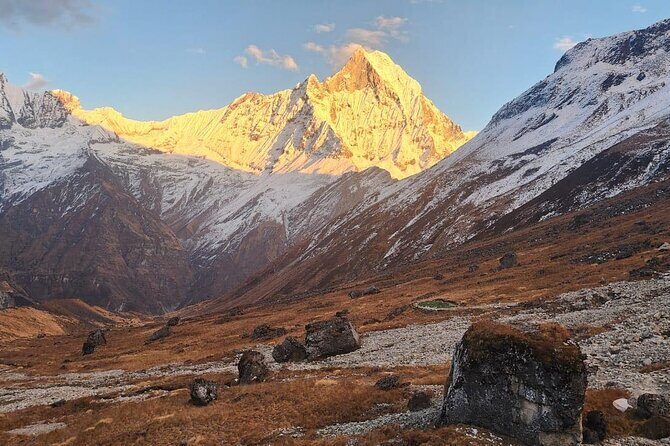
- Annapurna Sanctuary payoff: glacier views and a dramatic wall of peaks around Base Camp
- Village culture stops: Ghandruk’s Gurung culture and museum-style learning at the ACAP headquarters area
- Forest variety: bamboo, rhododendron, and oak zones that change the feel of each day
- Hot springs recovery: Jhinu Danda gives you a good reason to look forward to the descent
Setting Off: Kathmandu to Pokhara and the first mountain hints
Your journey starts in Kathmandu’s Thamel area, with the meeting point at View Nepal Treks & Expedition on Thamel Marg 24. From there, you drive to Pokhara in about 6 hours, with stops that pass through real Nepali countryside—villages, plus river valleys including the Trisuli and Marsyangdi systems. This is one of those “get your bearings” days where you won’t feel like you’re doing cardio yet, but you will start spotting how the terrain shapes life here.
Pokhara also sets your tempo. You’re given two nights in Pokhara, which is valuable because it gives you time to eat well, sleep, and prep your gear before your legs start earning their keep. You’ll also be doing private transport segments later (like getting to the trailhead area), which reduces the messy “figuring it out” time.
You can also read our reviews of more private tours in Kathmandu
Ghandruk’s Gurung villages and the Modi River starter day
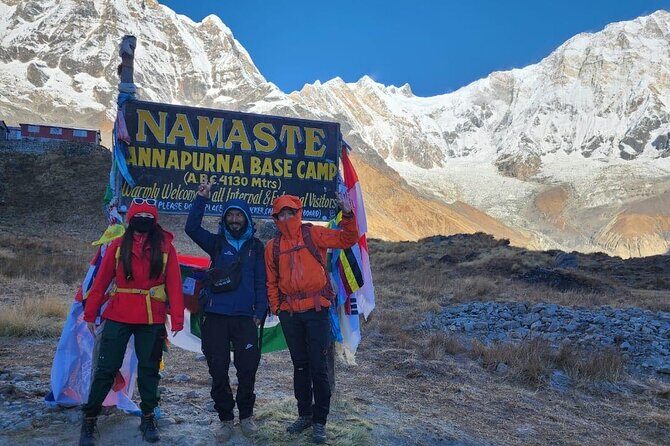
The first real trekking day moves beyond Pokhara’s big-deal views and into the Annapurna region’s lived-in countryside. You drive beyond Pokhara valley with grand glimpses of the Annapurna massif and Machhapuchare (Fishtail). Then you start walking from the river side near Bhirethati, following the Modi River corridor.
This day is built around rhythm. You start with a flatter walk along the river to Syauli Bazaar, then transition into stone-paved steps up toward Kimche, followed by gentle uphill toward Ghandruk. Expect the kind of trail that feels “challenging enough” for day one without trying to break you.
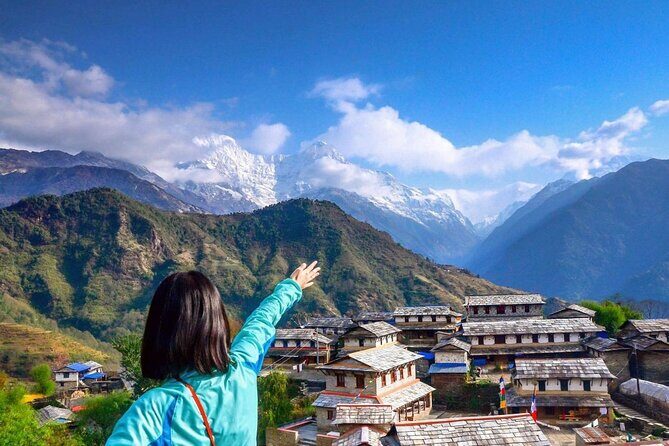
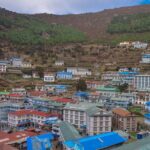
Once you reach Ghandruk, you get a cultural payoff that isn’t just window dressing. This is a Gurung village with strong local identity, and you can visit the Gurung local museum, plus the ACAP headquarters area. It’s a chance to understand why this region is protected and how trekkers fit into that bigger system. Ghandruk is also the kind of place where the views land hard: Annapurna South, Hiunchuli, and Fishtail/Machhapuchare show up clearly from the village vantage points.
Chhomrong to the Himalaya Hotel: terraced farms, bridges, and forest shade
Day two after Ghandruk focuses on the “stair-step” movement of the Annapurna foothills, then turns you toward the Sanctuary corridor. You head toward Kyomrong/Chomro, drop down through river areas, then climb back up through Gurjung toward Chhomrong. Chhomrong is described as the last permanent Gurung village and a common gateway area for Sanctuary and Base Camp trekking.
That matters because Chhomrong is where the trail starts to feel more committed. You leave behind some of the low-elevation village texture and move closer to the places where lodges become your routine. Chhomrong also becomes a mental marker: tomorrow is where the forest and gorge trekking gets more serious.
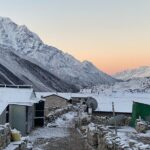
Next, you transition from Chhomrong downhill across terraced fields to the Chhomrong river, cross a bridge, then climb up toward Sinuwa-Danda. From there, you enter a dense forest stretch, reaching Bamboo—a camp-like lodge area in a gorge where the Modi River runs through bamboo, rhododendron, and oak forest. The highlight here is staying at the Himalaya Hotel, positioned in the middle of the forested river gorge.
If you like a trek that changes texture often, this is your kind of day. It’s not just “up, then down.” It’s up and down, yes, but framed by shifting vegetation and the steady presence of the river.
Annapurna Sanctuary to Base Camp: glacier views and pacing at altitude
After a night in the forest zone, the trek begins to feel like it’s aiming for a finish line. Morning trekking climbs higher as vegetation drops and you shift into alpine bushes and shrubs. Then you follow the Modi River upstream, right toward the Base Camp area.
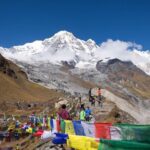
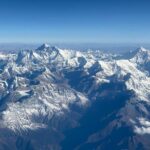
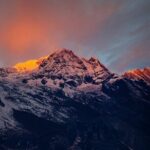
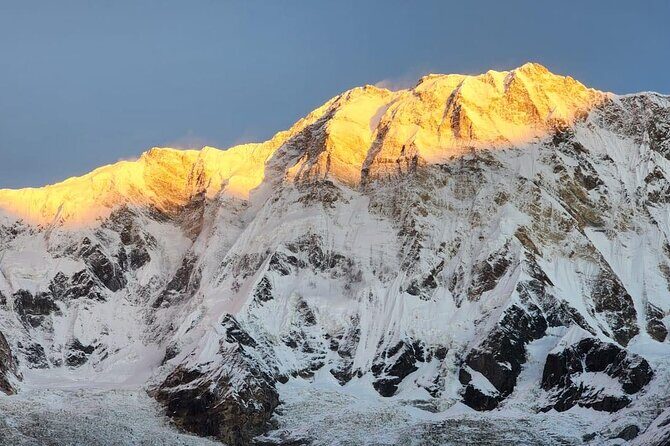
The route includes a section where the trail can feel steeper, including a last push associated with reaching Machhapuchare Base Camp, before continuing on to the big destination: Annapurna Base Camp. The draw here isn’t just one “pretty view.” It’s the sense of being surrounded. The Sanctuary brings you the giant Annapurna I wall effect, plus a valley filled with major white peaks—Annapurna I, Annapurna III and South, Fishtail/Machhapuchare, and other prominent summits mentioned in the route overview.
This is where you need to pace yourself. Even if you’re fit, the altitude and the effort add up. The itinerary’s structure helps: you get a guided push up over the necessary days, then you spend time at Base Camp and within the Sanctuary. That gives you breathing room to enjoy it rather than just arrive, snap photos, and immediately regret yesterday’s choices.
Downhill with payoff: Deurali, Sinuwa, and Jhinu Danda hot springs
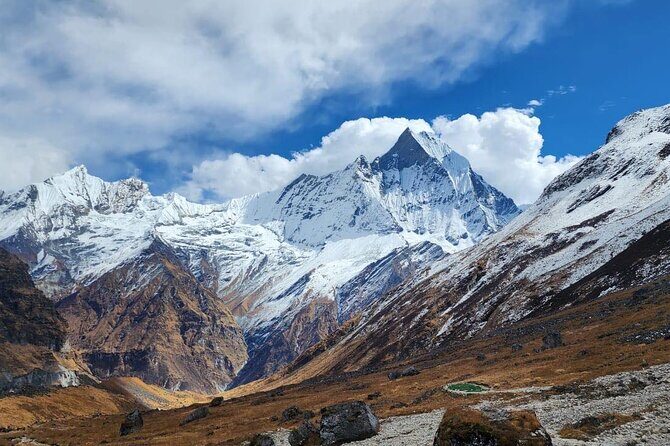
Once you’ve had your time near Base Camp, the trek turns into the satisfaction phase: long descents with less intense climbing, but still real walking. On the return, you go from the Sanctuary area down to Deurali, passing through the region associated with Machhapuchare Base Camp, then back into more forested zones and lodge areas like Bamboo and Sinuwa.
The trail around Sinuwa and Bamboo is often described as pleasant, and I can see why. When you drop out of the high-alpine feel, the air and views shift, and the forest corridors become a different kind of motivation—shade, tree changes, and the river gorge vibe.
Then comes Jhinu Danda, the trek’s most “soft reset” stop. From Bamboo you climb to Khuldi Ghar, then take a winding downhill through dense forest and descend back toward Chhomrong Khola. After crossing a bridge, you climb briefly back to Chhomrong ridge top, then drop down to Jhinu Danda. The standout reward: hot springs are about 20 minutes’ walk downhill near the Modi River.
This is the point where the trek stops feeling only like effort and starts feeling like a story. You’ll be tired, yes. You’ll also be rewarded for it.
You can also read our reviews of more hiking tours in Kathmandu
Landruk to Dhampus: suspension bridges and end-of-trek panorama time
The final walking phase is built for a gradual shift back toward civilization without losing mountain energy. From Jhinu Danda, you head down long to Modi River areas, cross a long suspension bridge, and walk past farm fields. Then you climb briefly to Landruk, one of the larger villages on the route, and later reach Tolka with views of Annapurna South and Huinchuli.
After that, the itinerary keeps giving you chances to see big peaks while you still work your way out. The next morning is a gradual trail with short ups and downs, passing Bheda Kharka. You then climb into cooler forest to Deurali, where the views are described as grand: Dhaulagiri, Annapurna South, Hiunchuli, Machhapuchare, and Ghandruk.
From Deurali, the trail slopes down through forested areas to Pothana, and then down to a ridge at Dhampus for superb panorama of the Annapurna–Manaslu–Lamjung region with Machhapuchare in view. Dhampus is a great “final air” spot—enough elevation for views, but close enough that you still finish the day comfortably.
Then you reach Phedi and take a short drive (about half an hour) back to Pokhara. From there, you fly or take a tourist bus back to Kathmandu the next day.
Price and logistics: what $1,100 buys you (and what it doesn’t)
At $1,100 per person, this trek isn’t a bargain, but it also isn’t “paying for nothing.” You’re paying for the structure that matters on a multi-day mountain trip: permits, planning, a licensed guide, a porter, meals, and trekking lodging, plus private transport on key transfer days.
Here’s what’s explicitly covered:
- A licensed guide and porter (with the porter supporting two clients)
- Breakfast, lunch, and dinner during trekking days (with counts listed for each meal type)
- Trekking accommodations in the route area
- Two nights of rooms in Pokhara, plus private transport for the Pokhara segments connected to the trek (including the Phedi–Pokhara return)
- Trekking permit and TIMS card
What’s not included:
- Drinks and grocery items
- Tips for guide and porter
- Any extra Kathmandu accommodation if you want to add nights (listed as $40 USD extra per night)
If you want a trek where the hardest part is the walking—not the paperwork—this pricing structure makes sense. If you like strict DIY travel and already have guides, porters, and permits lined up, then you might compare options. But for most first-time trekkers, paying for the “system” is exactly what keeps the trip enjoyable.
Guide, porter, and private-group comfort (Kumar, Sukman, Pande)
This is a private trek, so it’s only your group. That changes the vibe. You’re not stuck matching someone else’s pace, and your guide can adjust in real time.
The guide factor also shows up clearly in the written feedback tied to this operator. Names you may see mentioned include Kumar, Sukman, and Pande (along with variations like Koumar). The common theme is that the guide adapts to walking ability and stays attentive throughout the trip. I also like that the porter support is included, because on a trek like this, reducing the load can be the difference between finishing strong at Base Camp and grinding your way there.
Also, this kind of setup usually means fewer “where do we go?” moments. You get a real meeting point, pickup is offered, and a mobile ticket is provided—small details, but they matter when you’re switching between road travel and trail travel.
The best-fit traveler (and who should think twice)
This trek fits well if you’re:
- Comfortable with hiking days that include uphill and downhill
- Looking for both mountain icons and real village life
- Happy to travel with a guide and let someone else handle permits and daily logistics
- Interested in a route that uses the Modi River corridor and changes forest zones as you climb
You might want to be more cautious if:
- You hate steep climbs on short notice (there are steep sections, including near the high Sanctuary push)
- You’re very sensitive to weather changes, since the experience depends on conditions
- You expect luxury in every night stay (the trek nights are lodge-style, and that’s not spelled out as a high-end experience)
Should you book this Annapurna Base Camp private trek?
If your goal is a classic Annapurna Base Camp route with solid support, strong village culture stops, and a real chance to experience the Sanctuary’s peak wall feel, this one is a strong match. The value is in the package: guided planning, meals, trekking lodging, permits, and porter assistance, all wrapped into a private format.
My advice for the decision: look at your walking comfort for steep days and be honest about your altitude pacing. If you can handle that, the route gives you variety—river walking, forest shade, hot springs, and a grand finale panorama around Dhampus—without making you manage the messy parts yourself.
FAQ
How long is the trek?
It’s listed as approximately 10 days.
Where does the experience start and end?
It starts at View Nepal Treks & Expedition P. Ltd. in Thamel, Kathmandu, and ends back at the same meeting point.
Is this a private trek?
Yes. It’s a private tour/activity, so only your group participates.
Are meals included during the trek?
Yes. Food is included, with breakfast, lunch, and dinner provided during trekking days (with the meal counts listed in the inclusions).
Are trekking permits included?
Yes. The trekking permit and TIMS card are included.
Do I get a guide and porter?
Yes. A licensed guide and porter are included (noted as 2 clients per porter).
Is pickup offered?
Pickup is offered, and the experience includes a mobile ticket.
Is accommodation in Kathmandu included?
Not included. If you need accommodation in Kathmandu, it costs $40 USD extra per night.