Five UNESCO sites in one tight Kathmandu day. It’s a fast, well-paced sampler of how Kathmandu blends Hinduism and Buddhism, starting at the Monkey Temple and ending at Kathmandu’s old royal core. I like the way the stops jump from hilltop Swayambhunath to the riverbank intensity of Pashupatinath, and I like that you get an experienced guide plus private transport for a fixed morning start. The main drawback is simple: with about 30 minutes per stop, you’ll need to accept short visits and plan extra time if you want to linger.
This tour is also strong value for first-time Kathmandu planning. For around $40, you’re paying for private transportation and guided time, while the big add-on is that monument entrance fees (listed as worth $30) and lunch are not included. If you’re the kind of person who wants a slow, photo-by-photo day, this might feel rushed.
One detail I genuinely appreciate: the tour is run by a local operator, Sublime Trails Pvt. Ltd, and your guide can really shape the day. In the experiences I saw, guides like Ram, Shiva, Ajit, Ganesh, and Ramesh were praised for explaining details, and some even guided people toward local bites like momo and lassi between temple visits.
In This Review
- Key Highlights You’ll Feel During the Day
- Five UNESCO Sites in One Kathmandu Day: Worth It or Too Much?
- Pickup, Private Transport, and the Max 15 Group Size
- Stop 1: Swayambhunath Monkey Temple and Its Hilltop Blend
- Stop 2: Patan Durbar Square’s Newari Temple Cluster
- Stop 3: Bouddhanath Stupa’s Big Dome Moment
- Stop 4: Pashupatinath Temple on the Bagmati River
- Stop 5: Kathmandu Durbar Square and Kumari Temple
- Food Between Temples: Where the Day Can Tickle Your Tastebuds
- Price and Time Math: What Your $40 Really Buys
- Weather and Pacing: The Day Works Best When Conditions Cooperate
- Should You Book This Kathmandu Five-UNESCO Tour?
- FAQ
- What UNESCO World Heritage Sites are included?
- How long is the Kathmandu tour?
- What time does the tour start?
- Is pickup included?
- Are entrance fees included in the price?
- Is lunch included?
- How many people are in the group?
- What happens if weather is bad?
Key Highlights You’ll Feel During the Day
- Swayambhunath first: a morning start at the Monkey Temple area sets the tone with Hindu-Buddhist symbolism.
- Newari temple cluster at Patan Durbar Square: concentrated temple architecture and a museum stop keep the short time meaningful.
- Bouddhanath’s massive dome: a major Buddhist landmark with a striking pyramid-like element on top.
- Pashupatinath’s scale on the Bagmati River: a Hindu pilgrimage complex tied to Nepal’s national deity.
- Durbar Square finale with Kumari Temple: the day ends in Kathmandu’s royal-heart zone.
- Small group, max 15: easier movement and fewer slowdowns than you’d expect for a multi-stop UNESCO day.
Five UNESCO Sites in One Kathmandu Day: Worth It or Too Much?
The best argument for this tour is focus: you’re not trying to do everything in Kathmandu, you’re doing the five UNESCO anchors around the valley in one stretch. That matters because Kathmandu’s temples aren’t just sights. They’re working religious spaces, and moving between them quickly helps you get the big picture without spending days commuting.
What I like most about the lineup is the mix. You get:
- a hilltop stupa complex (Swayambhunath),
- a palace-temple core (Patan Durbar Square),
- a major Buddhist stupa landmark (Bouddhanath),
- a major Hindu pilgrimage complex on the Bagmati (Pashupatinath),
- and another royal core ending at Kathmandu Durbar Square with Kumari Temple.
Yes, it’s a lot of sites for one day. But the trade is efficient orientation. If your goal is to understand why people come to Kathmandu for temples, this gives you a sharp starting map.
You can also read our reviews of more historical tours in Kathmandu
Pickup, Private Transport, and the Max 15 Group Size
You start at 9:15 am, and the day is designed to run about 4 to 6 hours. You get pickup offered, private transportation, and an experienced tour guide. The small group size (maximum 15) is important here because five stops means tight timing, and fewer people usually equals less waiting around.
The tour also mentions a mobile ticket, which can help reduce hassles compared with paper-only entry. Add in group discounts (when available) and this looks geared toward budget-conscious visitors who still want guided access.
One practical reality: because each stop is listed as around 30 minutes, the schedule is built on momentum. If traffic slows things down, you’ll feel it. This is a tour for people who can handle a “see it, learn it, move on” rhythm.
Stop 1: Swayambhunath Monkey Temple and Its Hilltop Blend
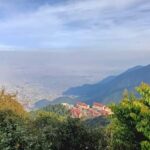
You begin at Swayambhunath, commonly known as the Monkey Temple. The setting is a big part of why this works as a first stop. You’re starting with a Buddhist stupa complex that’s also strongly tied to Hindu tradition, so early on you get that Kathmandu blend without needing explanation.
This site is described as one of Nepal’s holiest Buddhist chaityas. There’s also a legend that it evolved spontaneously when the valley was created out of a primordial lake more than 2,000 years ago. Whether you treat the legend as history or symbolism, it helps explain why this place feels layered instead of just “ancient.”
With about 30 minutes, you’ll likely be doing a circuit and focusing on stupas and chaityas rather than deep study. That time box is the trade: you’ll leave with strong impressions and a basic framework, but not a slow, all-day appreciation.
Stop 2: Patan Durbar Square’s Newari Temple Cluster
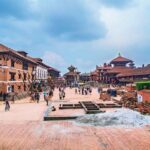
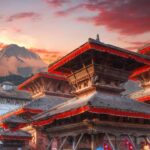
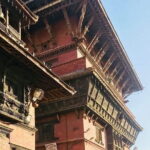
Next is Patan Durbar Square, the ancient royal palace area known for a dense concentration of Newari architecture temples. This stop is special because it’s not one single monument. It’s a whole packed zone of temple forms, so even a short walk can feel visually rich.
The description emphasizes the “concentrated mass of temples,” and that’s exactly what makes this kind of stop fit a short tour. You’re not relying on one highlight and hoping it holds your attention for 30 minutes. You get variation in surfaces, layouts, and temple styles as you move through the square.
In the experiences shared, people also mentioned a museum inside Durbar Square as mesmerising. That’s a useful note for you: if you enjoy history context more than photo ops, ask your guide where to focus while you have limited time.
The drawback is that Durbar Square areas can be visually busy. If you’re the type who needs quiet and space, you might want to return later on a separate day—this tour gives you the orientation, not the full patience test.
Stop 3: Bouddhanath Stupa’s Big Dome Moment
Then comes Bouddhanath Stupa, one of the oldest Buddha monuments mentioned in the description, associated with a build date around the 14th century. The key visual details are the huge dome and the Buddhist pyramid-like element on top. It’s the kind of monument where even from a distance you can tell you’re looking at something major.
This stop is listed at about 30 minutes, and that’s enough to grasp the scale and take in the main structure. If you love Buddhist art and stupa design, you’ll likely appreciate how the architecture makes the whole area feel centered and deliberate.
Admission isn’t included for monuments (entrance fees worth $30 are noted as extra), so build that into your day-planning mindset. The tour can get you there and guide you through what to notice, but you still need to cover entry costs.
A few more Kathmandu tours and experiences worth a look

Stop 4: Pashupatinath Temple on the Bagmati River
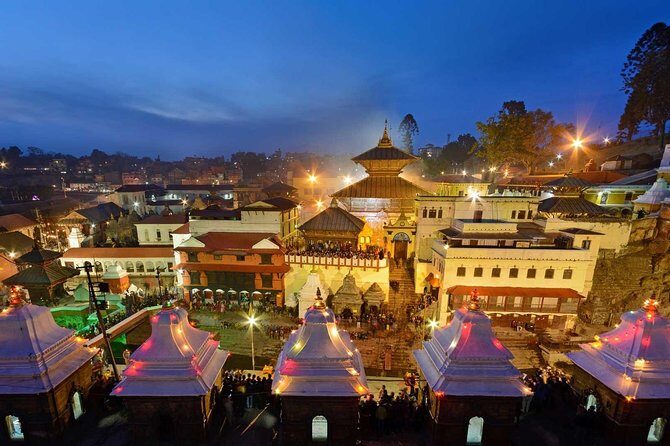
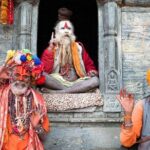
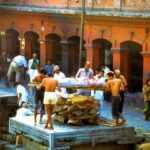
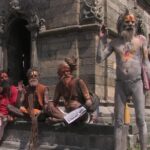
Pashupatinath Temple is the tour’s spiritual heavy hitter. It’s described as a famous Hindu pilgrimage site situated on the bank of the Bagmati River and known as the seat of Nepal’s national deity. The temple complex is also described as sprawling and as the biggest in Nepal and India.
This is where the tour’s Hindu side becomes unmistakable. You’re dealing with a large religious complex rather than a single landmark, so your guide’s direction matters more here than at smaller stops. In the experiences I saw, guides were praised for being well prepared and explaining details, and Pashupatinath is the kind of place where those explanations help you understand what you’re seeing.
With only about 30 minutes, you won’t cover everything. Instead, you’ll likely focus on a key viewpoint, key temple structures, and the overall layout that makes it feel like a pilgrimage city within Kathmandu.
If your preference is “one site, slow time,” this might feel like a quick pass. But if your preference is “see the heart of the valley,” this stop is worth the sprint.
Stop 5: Kathmandu Durbar Square and Kumari Temple
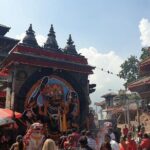
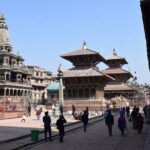
The final temple-core stop is Kathmandu Durbar Square, with a mention of the Kumari Temple. This area is connected to the old royal palace zone and is the kind of place where architecture feels like it’s telling a civic story, not just a religious one.
Because your time here is also around 30 minutes, your goal will be to get your bearings quickly: identify the main religious and palace structures, catch the central atmosphere, and get a snapshot of how this square fits into the bigger UNESCO picture.
In one shared experience, someone said Kathmandu was a favorite place to walk, and they connected their Basantapur-area time with local food hunting afterward. That’s a good way to think about your finale: Durbar Square closes the loop on royal architecture, and then you’ll want to translate that momentum into a meal and a wander.
Food Between Temples: Where the Day Can Tickle Your Tastebuds
Lunch is not included, so you’ll likely want a plan for food before or after the tour. The nice part is that the day’s route places you near areas where local snacks are easy to find once you’re done with the temple stops.
In the experiences shared, people highlighted local momo around Patan Durbar Square. Another account mentioned a guide taking someone to freak street for local foods and also getting lassi at Indra Chowk. Those are not guaranteed stops for everyone, but they show the kind of thing a good guide can connect you to: simple, local bites in the middle of culture-heavy days.
If you want practical value from the tour, treat it like this: use the guided time for the “what am I seeing” part, then use your free time to do the “what am I eating” part.
Price and Time Math: What Your $40 Really Buys
On paper, the price is $40, and the tour includes private transportation and an experienced guide. What’s not included is monuments entrance fees (noted as worth $30) and lunch.
So how do you judge value? I’d look at what you’re avoiding. Without a guided circuit like this, you’d spend time figuring out routes, sequencing, and what to prioritize across multiple UNESCO sites. Here, you buy a planned route and someone to point out what matters while you’re on the clock.
This tour is also short enough that it can fit into a first or second Kathmandu day without derailing your entire schedule. But because entrance fees and lunch are extra, your real total will be higher than $40. If you’re traveling on a tight budget, just make sure you’re mentally ready for those add-ons.
Weather and Pacing: The Day Works Best When Conditions Cooperate
The tour requires good weather. If it’s canceled due to poor weather, you’ll be offered a different date or a full refund. That’s not a small detail in Kathmandu valley because visibility and comfort can swing quickly.
Pacing is another factor. The tour is designed to fit five major UNESCO sites into about 4 to 6 hours, with around 30 minutes per stop. That makes it a great orientation day, but it’s not built for “deep focus at each shrine.”
I’d also consider your travel style. If you like structured days with someone helping you interpret what you see, this tour clicks. If you’re the type who wants to sit, read, and return multiple times to one site, you’ll probably wish you had booked less and stayed longer somewhere instead.
Should You Book This Kathmandu Five-UNESCO Tour?
Book it if:
- you’re short on time in Kathmandu but want the five UNESCO anchors around the valley,
- you like a guided route that helps you understand what you’re looking at,
- you want a small group experience (max 15) with private transport,
- and you’re okay with about 30 minutes per stop.
Skip it (or plan extra time) if:
- you need longer, quieter visits at a single complex like Pashupatinath,
- you’d rather explore independently with no fixed schedule,
- or you don’t want any extra spend beyond the base price, since entrance fees and lunch are not included.
If you can handle a concentrated day and you want a strong Kathmandu overview, this is a practical way to get oriented fast—then you can come back later when you feel ready to slow down.
FAQ
What UNESCO World Heritage Sites are included?
The tour includes Swyambhunath Stupa, Bouddhanath Stupa, Pashupatinath Temple, Basantapur Durbar Square (Kathmandu Durbar Square area), and Patan Durbar Square.
How long is the Kathmandu tour?
It runs about 4 to 6 hours.
What time does the tour start?
The start time is 9:15 am.
Is pickup included?
Pickup is offered, and the tour includes private transportation.
Are entrance fees included in the price?
No. Monument entrance fees worth 30 USD are not included.
Is lunch included?
No, lunch is not included.
How many people are in the group?
The maximum group size is 15 travelers.
What happens if weather is bad?
The experience requires good weather. If it’s canceled due to poor weather, you’ll be offered a different date or a full refund.