REVIEW · KATHMANDU
Kathmandu 2 days tour private car and guide, cover major highlights
Book on Viator →Operated by Himalaya Holiday service Pvt. Ltd.(HHS) · Bookable on Viator
Kathmandu’s spiritual sights land fast. This 2-day private car and guide tour strings together major UNESCO-class landmarks with real local context, from Kathmandu Durbar Square to Pashupatinath. The plan is efficient, and you get enough flexibility to tune the pace.
I especially love how the day is built around meaningful stops, not just quick photo beats. With guide Paras leading the way, I found the stories practical and easy to follow, so the places make sense instead of feeling like random monuments. I also like the routing: you cover the big names—Monkey Temple/Swayambhunath, Pashupatinath, and Bouddhanath—then shift gears toward Patan and Bhaktapur.
One consideration: the Pashupatinath area includes views of public cremation ghats on the Bagmati River, so it can feel heavy. If you’re sensitive to that kind of scene, plan your comfort level ahead of time.
In This Review
- Key highlights worth planning for
- Private Car and Guide: What Makes This 2 Days Work
- Day 1 Route Through Kathmandu: Durbar Square to Bouddhanath
- Kathmandu Durbar Square and Kumari Baha
- Swayambhunath (Monkey Temple): 30 Minutes of Big Views Energy
- Pashupatinath: Temple Visits Plus Bagmati River Cremation Ghats
- Bouddhanath (Little Tibet): A Breather After the Temple Intensity
- Pashupatinath and the Bagmati River: How to Handle the Most Intense Stop
- Day 2: Patan and Bhaktapur Durbar Squares Without the Time Squeeze
- Patan Darbar Square: Medieval Palaces and Temples
- Bhaktapur Durbar Square: Village-Feeling Town-Scale Heritage
- Timing, Pickup, and Where the Day Actually Goes
- Price and Value: Is $95 a Smart Deal for Two Days?
- Who This Tour Suits Best (and Who Might Skip It)
- Should You Book This Kathmandu 2-Day Private Tour?
- FAQ
- What time does the tour start?
- Is hotel pickup and drop-off included?
- What’s the duration of the tour?
- Are monument entry fees and food included?
- Can I choose when to start Day 1?
- Is this a private tour?
- Is free cancellation available?
Key highlights worth planning for
- Flexible Day 1 timing: after booking, you can choose your start time during a phone call confirmation.
- Private guide context: you’ll have a local guide throughout, with stop-by-stop explanations.
- Major Kathmandu landmarks in one loop: Durbar Square, Monkey Temple/Swayambhunath, Pashupatinath, and Bouddhanath.
- A focused Day 2 hitting two Durbar squares: Patan Durbar Square and Bhaktapur Durbar Square in about 5–7 hours.
- Hotel pickup and drop-off: door-to-door convenience, which matters in a traffic-heavy city.
- Comfortable length: Day 2 stays within a half-day time window rather than dragging all day.
Private Car and Guide: What Makes This 2 Days Work
This tour is built for people who want the big Kathmandu hits without spending your energy figuring out transport. You get your own private car/van/bus plus a local guide for the full experience, and that single choice changes everything: you move faster, you waste less time, and you ask questions without awkward pauses.
The itinerary is also structured in a way that respects geography. Day 1 concentrates on the Kathmandu Valley core (temple zones, stupas, and Durbar Square), then Day 2 expands outward to Patan and Bhaktapur. That kind of planning matters because Kathmandu’s travel time can quietly eat half a day if you’re bouncing around without a plan.
One more detail I like: the tour is private, meaning your group is the only group in the experience. You’re not waiting on other schedules, and you can slow down if something catches your eye—or speed up if you’re temple-tired.
You can also read our reviews of more guided tours in Kathmandu
Day 1 Route Through Kathmandu: Durbar Square to Bouddhanath
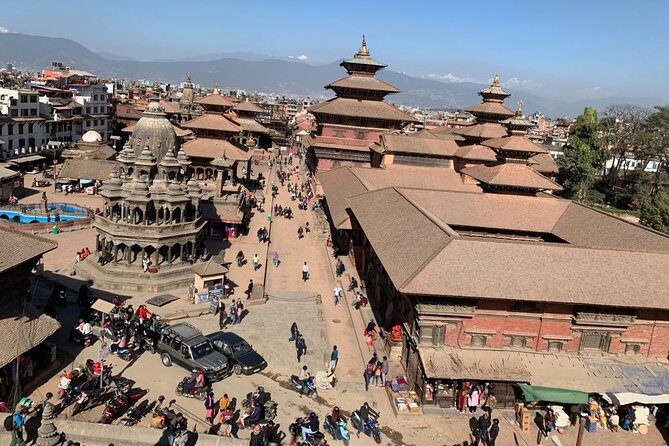
Day 1 is your classic Kathmandu “greatest hits,” but with a guide who helps you understand what you’re actually seeing. You start near the Kathmandu Durbar Square area for roughly an hour, then you move through the sites in an order that makes sense for a morning-to-afternoon rhythm.
Kathmandu Durbar Square and Kumari Baha
Kathmandu Durbar Square is where the city’s royal-era buildings still feel alive in the layout. In your time here, you’ll connect key points like the palace complex and the courtyards where you can spot sculptures, architectural details, and memorial elements connected to rulers from the Shah dynasty and the Gurkhas.
A major highlight is the living goddess association. The experience specifically calls out Kumari Baha, connected to the Kumari tradition. Even if you’re not there for any ceremony, it’s a strong anchor for understanding how spirituality and daily life overlap in Kathmandu.
Practical note: Durbar Square areas can be busy. If you’re sensitive to crowds, plan to look slowly in the open courtyards and save your biggest photos for the moments when the flow eases.
Swayambhunath (Monkey Temple): 30 Minutes of Big Views Energy
Next comes Swayambhunath, also called the Monkey Temple. The drive is short—about 30 minutes—so you don’t feel like the day is all transit. This stop is one of those places where the setting explains why it became a major spiritual site: you get an elevated feel over the city and a strong sense of being in a temple complex, not just in front of a temple gate.
Also, the “monkey” nickname means you’ll likely share your space with them at ground level. Keep your phone secure and watch your step if you’re moving through the busy areas.
Pashupatinath: Temple Visits Plus Bagmati River Cremation Ghats
Then you head to Pashupatinath. The tour sets aside about an hour for the temple area, with a 30–40 minute drive from the prior stop. Pashupatinath sits on the Bagmati River, and your guide ties the place directly to its religious meaning—temple life, holy men, and the river’s sacred role.
This is the part of the itinerary you should treat with extra awareness. You’ll be in an area where public cremation rites are carried out. It’s an important religious function here, but it can be emotionally intense for many people. Plan to keep your pace respectful and give yourself time to step back if it feels like too much.
You can also read our reviews of more private tours in Kathmandu



Bouddhanath (Little Tibet): A Breather After the Temple Intensity
Finally, Day 1 shifts to Bouddhanath Stupa, often described as a gateway to “Little Tibet.” The drive from Pashupatinath to Bouddhanath is short, so it works well as a calmer closing chapter. This is a great place to regroup, watch how people move around the stupa, and soak in the slower rhythm.
Bouddhanath is also a good contrast to the more “vertical” focus of temples. Here the emphasis feels circular and steady—less about entering a building, more about walking your attention around the stupa.
Day 1 ends with the drive back to your hotel, so you’re not stuck trying to solve transport after a full day.
Pashupatinath and the Bagmati River: How to Handle the Most Intense Stop
If you only remember one thing about Pashupatinath, make it this: it’s not a museum scene. This stop includes what the itinerary describes as open public crematorium activity with the rites and rituals happening. You may also see holy men with painted faces, dreadlocked hair, and ash-applied body—details your guide can help you interpret in context.
Here’s my practical advice so you feel in control:
- Decide your comfort level in advance. If this kind of imagery feels too much, you might want to adjust expectations for Day 1.
- Move with intention. Look, listen to your guide, but don’t linger in ways that disrupt the area.
- Keep your own pace. Your guide can usually help you find a view angle that’s respectful and still gives you understanding.
This stop is why the tour gets described as spiritually uplifting by some people. It’s also why it isn’t a comfortable fit for everyone. Knowing that trade-off is the key.
Day 2: Patan and Bhaktapur Durbar Squares Without the Time Squeeze
Day 2 is a more relaxed structure: Patan Darbar Square and Bhaktapur Square in about 5–7 hours max. That time window is valuable because it gives you space to move at a humane speed. You’re not trying to run from one building to the next in a frantic sprint.
Patan Darbar Square: Medieval Palaces and Temples
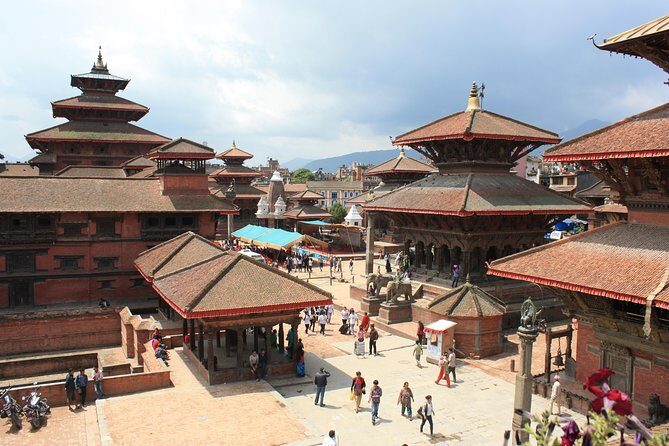
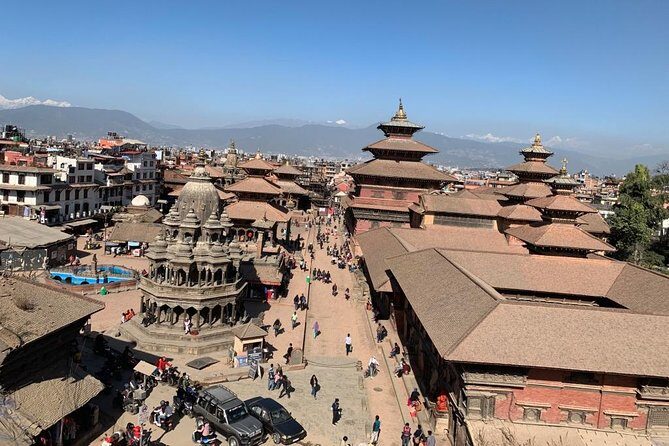
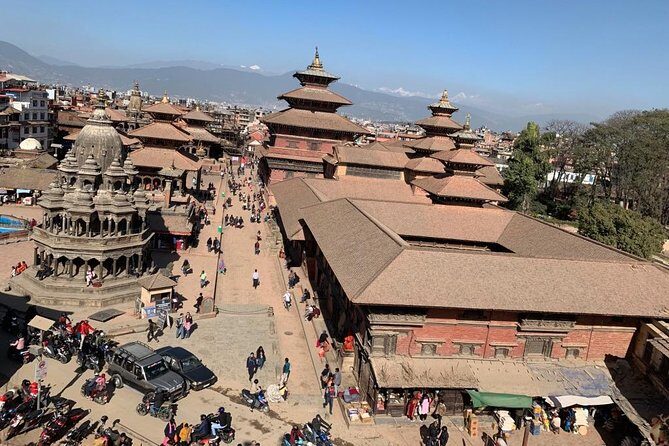
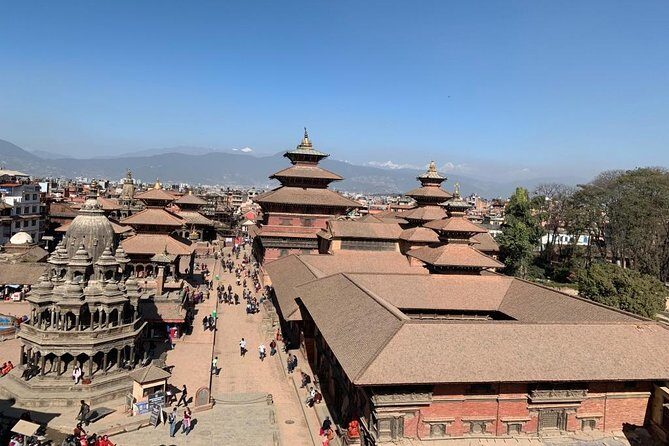
Patan’s Durbar Square is the kind of place where architecture does the talking. The itinerary highlights medieval palaces and temples, and that’s the right mindset. Instead of treating Patan like a single “spot,” you’ll get more out of walking slowly between sections and noticing how the buildings relate to each other.
If you like art details—carvings, courtyards, and temple forms—this stop is a strong match. Even if you can’t read every inscription, you’ll still feel the craftsmanship through the layout.
Bhaktapur Durbar Square: Village-Feeling Town-Scale Heritage
Then you shift to Bhaktapur, also highlighted for medieval palaces, temples, and the village-feeling feel around the historic core. The tour frames this as a chance to see heritage in a lived-in context, not just a fenced-off relic.
Bhaktapur often feels more human-scale than some larger city centers, which makes it easier to connect with the daily textures around the Durbar Square area. And because the day is only 5–7 hours, you’re not exhausted by the end of it.
The trip ends back where you need it, with the same convenience of hotel pickup and drop-off included.
Timing, Pickup, and Where the Day Actually Goes
Most tours start by telling you when they begin, and then quietly running long. This one gives you a clear starting point: 9:45 am. It also offers a helpful perk for Day 1—after confirmation, you can choose your departure time during a phone call.
That matters in Kathmandu because morning conditions can change fast. If you want to beat crowds around key areas, you can. If you need a slower start because of sleep or jet lag, you can also adjust.
The itinerary is built around short drives between stops—like the roughly 30-minute shift to Swayambhunath/Monkey Temple and the later short drive to Bouddhanath—so you get more time on the ground. And because you have a guide and car, you aren’t juggling map apps while trying to read signage in a fast-moving city.
Price and Value: Is $95 a Smart Deal for Two Days?
At $95 per person, the headline value is that you’re paying for three things at once: a private guide, private transport, and hotel pickup/drop-off. In Kathmandu, transport alone can be tricky to manage cheaply, especially if you want reliable timing across multiple heritage zones.
What isn’t included is important: the tour lists monument entry fees as not included, and food and drinks as not included. That means your total spend could rise depending on what sites charge on your visit dates. I like to think of this as budgeting for the basics while keeping control of your meals.
Also, the tour notes group discounts, plus a “mobile ticket” approach. That usually helps with simplifying the day, not just saving money. And the fact that it’s often booked well in advance (87 days on average) suggests this is a popular way to get Kathmandu efficiently.
Bottom line: if you want a guide-led route that hits the core sights in two days without you stress-testing local transit, the price feels fair. If you’d rather go completely independent and handle entry fees and timing on your own, you might prefer a cheaper option. But you’ll give up a lot of convenience.
Who This Tour Suits Best (and Who Might Skip It)
This is a strong match if you want:
- a private plan with door-to-door pickup
- major cultural and religious landmarks without figuring out routes
- a guide-led explanation at each stop
It’s also a good choice if you like structure. Day 1 is intense with multiple major landmarks, and Day 2 keeps a manageable pace with two Durbar Square stops.
It may be a poor fit if:
- you’re highly sensitive to death-related scenes, since Pashupatinath includes public cremation ghats
- you want zero structured timing and total wandering
If you fall in the middle—curious but cautious—go in with clear expectations. Your guide can help you understand what you’re seeing, but your comfort still matters.
Should You Book This Kathmandu 2-Day Private Tour?
Yes, if you want a straightforward way to see Kathmandu’s most important highlights with a guide, and you like the idea of hotel pickup plus a private car for two days. Day 1 is packed, but it follows a logic that keeps travel time reasonable, and Day 2’s 5–7 hour window makes it feel doable rather than exhausting.
I’d especially recommend it if you’re the type who enjoys learning why a place matters—Kumari Baha at Durbar Square, Swayambhunath’s temple setting, Pashupatinath’s river-connected spiritual role, and the stupa-centered rhythm at Bouddhanath. Just be honest about your comfort level for the cremation area.
If you want a calm vacation with lots of free time and you’re not interested in heritage-heavy touring, you might choose a slower plan. But for a short stay, this is the kind of itinerary that helps you get your bearings fast and leave with a real sense of the city.
FAQ
What time does the tour start?
The start time is 9:45 am.
Is hotel pickup and drop-off included?
Yes. Hotel pickup and drop-off are included.
What’s the duration of the tour?
The tour is listed as approximately 2 days. Day 2 is about 5–7 hours max.
Are monument entry fees and food included?
Food and drinks are not included, and monument entry fees are not included. You may need to budget for site charges depending on what’s required.
Can I choose when to start Day 1?
Yes. The itinerary allows you to choose any time on a phone call after booking confirmation.
Is this a private tour?
Yes. It’s a private activity, so only your group participates.
Is free cancellation available?
Yes. You can cancel up to 24 hours in advance for a full refund.