Four sacred stops in one Kathmandu day.
This full-day heritage tour is interesting because it mixes major Hindu and Buddhist sites with UNESCO-linked royal squares, all wrapped into a 6–8 hour plan with a guide and a smooth morning start. It’s also built for real-world travel days: pickup is offered, the group stays small (up to 20), and you get a mobile ticket.
Two things I really like about how this tour is set up are the pacing and the focus. You get meaningful time at Pashupatinath (about 2 hours) and Kathmandu Durbar Square (about 2 hours), not just quick look-and-run photo stops, and Swayambhunath gets a focused hour on a hilltop setting. A possible drawback to plan around: entrance fees are not included (except Pashupatinath is listed as free), so you’ll want a bit of cash or card for the remaining sites.
In This Review
- Key highlights you’ll care about
- A Full-Day Heritage Loop That Makes Kathmandu Make Sense
- Start at Mountain Rock Treks: The Quick Briefing That Saves Confusion
- Pashupatinath Temple: Why This Bagmati River Site Pulls Everyone In
- Practical note for this stop
- Swayambhunath: Hilltop Calm, Big Views, and the Meaning of Sublime Trees
- Kathmandu Durbar Square (Basantapur): Royal Power in Courtyards and Shrines
- Price and Logistics: Does $105.34 Feel Like Good Value?
- Timing That Won’t Drain You (Most Days)
- Who This Tour Fits Best in Kathmandu
- Tips to Get More Out of Each Stop
- Should You Book This Kathmandu City Tour?
- FAQ
- How long is the Kathmandu city tour?
- What time does the tour start?
- Is pickup offered for this experience?
- Where is the meeting point?
- Which heritage sites are included in the planned stops?
- Are entrance fees included?
- Is food and drinks included?
- What is the maximum group size?
- Do I need to provide passport details?
- Is a mobile ticket used, and are service animals allowed?
- Can I cancel for a full refund?
Key highlights you’ll care about
- Pickup + driver/guide keeps your first Kathmandu morning from feeling like a scavenger hunt
- Small group (max 20) means you’re less likely to get lost in the crowd
- Three main heritage stops with set time windows: Pashupatinath, Swayambhunath, Kathmandu Durbar Square
- Pashupatinath admission listed as free, while other entrances are not included
- Mobile ticket helps you stay paper-light and move faster at checkpoints
A Full-Day Heritage Loop That Makes Kathmandu Make Sense
Kathmandu can feel overwhelming fast. Temples everywhere, traffic that never truly sleeps, and religious sites that don’t need a reason to be important—though they do have one. This tour is built to give you a clear “big picture” day: major sacred Hindu space, an iconic hilltop Buddhist site, and a royal durbar square tied to the story of the Kathmandu Valley.
I like that the schedule respects how long heritage sites actually take. Even if the planned sightseeing blocks add up to roughly five hours, you still get the travel time and walking time needed to stay calm instead of rushing. You also start at 9:00 am, which is ideal if you want a full day without turning the evening into a tired blur.
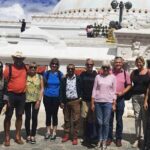
Your group size is capped at 20, which matters more than it sounds. In a city like Kathmandu, a small group helps you hear instructions, follow the route, and avoid spending half the day playing telephone with your own plans.
You can also read our reviews of more city tours in Kathmandu
Start at Mountain Rock Treks: The Quick Briefing That Saves Confusion
Your morning begins at Mountain Rock Treks And Expedition Pvt. Ltd., which acts as the meeting point. There’s a short pre-briefing (about 15 minutes) before you head out to the sites.
That brief stop is underrated value. You’re not just handing over your name and hoping for the best—you get a chance to confirm timing, group movement, and what to expect at each location. If you’re the sort of traveler who hates last-minute surprises (same), this helps you get your bearings fast.
Also, this is the kind of operation that tends to communicate clearly. In past feedback, a solo traveler specifically praised a local contact named Ketan for welcoming them and providing local knowledge that made arrival smoother. That doesn’t guarantee your day will match every detail, but it’s a good sign about how they handle comfort and coordination.
Pashupatinath Temple: Why This Bagmati River Site Pulls Everyone In
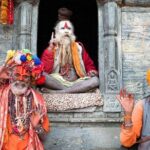
Pashupatinath Temple is on the eastern outskirts of Kathmandu, straddling both banks of the holy Bagmati River. It’s one of the most sacred Hindu temples in Nepal and is devoted to Lord Shiva, which means you’re not visiting a museum site. You’re stepping into an active spiritual landscape where pilgrims come for worship and life-cycle rituals.
You’ll have about 2 hours here, which is just enough time to slow down without getting stuck in one small angle. The key thing to understand before you go is that Pashupatinath is strongly connected to death rites as well as devotion. Many elderly visitors come to spend their final weeks, and cremations are carried out on the riverbank. In local belief, dying at Pashupatinath is tied to ideas about rebirth—specifically that someone will be reborn as a human regardless of their sins.
There’s also a striking detail that shows how tightly belief, ritual, and daily life connect here. The temple’s astrologers are described as predicting the exact death day. Whether you take that literally or not, it helps you understand why this place feels different from other temples: it’s a spiritual center that people plan their lives around.
Admission at Pashupatinath is listed as free for this experience. That’s a practical win for your budget, and it also means you’ll spend more time on-site and less time figuring out payment logistics.
Practical note for this stop
Dress thoughtfully. You’ll be in a sacred setting with a mix of worshippers and ritual activity, so keep things respectful. If you’re unsure, choose clothing that covers shoulders and knees.
Swayambhunath: Hilltop Calm, Big Views, and the Meaning of Sublime Trees
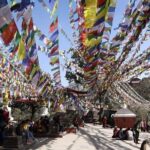
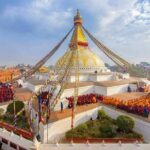
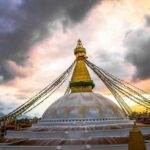
Next up is Swayambhunath Temple, an ancient religious site on a hill in the Kathmandu Valley, west of the city center. Its Tibetan name is explained as meaning Sublime Trees, referencing the varieties of trees found on the hill.
Swayambhunath works well as a reset after the intensity of Pashupatinath. You get about 1 hour here, which is enough to understand the site’s role without turning it into a marathon. Because it’s on a hilltop, expect a bit of elevation and walking, and plan to take your time with the approach.
This stop is valuable for two reasons. First, it gives you a major Buddhist landmark in a day that started with Hindu worship space, so the religious geography of Kathmandu becomes clearer. Second, the meaning behind the name helps you look past the photos and notice how the natural setting is part of the site’s identity.
Admission for Swayambhunath is not included in the experience price. So budget for an entrance fee here, even though the overall tour price looks straightforward.
You can also read our reviews of more historical tours in Kathmandu



Kathmandu Durbar Square (Basantapur): Royal Power in Courtyards and Shrines
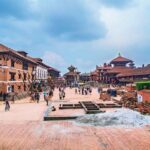
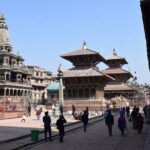
Kathmandu Durbar Square is one of three durbar squares in the Kathmandu Valley, and it’s tied into UNESCO World Heritage status alongside the other two. It’s also known as Basantapur or Basantapur Durbar Square, which is useful to know because you may see it referenced under any of those names depending on signage and guide explanations.
This stop is also where you’ll see how the architecture and layout reflect centuries of rule. Kathmandu Durbar Square includes palaces connected to the Malla and Shah monarchs, along with courtyards, temples, and shrines. The whole area is more than one building—it’s a cluster of spaces that were designed for power, ceremony, and public life.
You’ll have about 2 hours here, which is the right amount of time for a place like this. Durbar squares reward the slower look: check out courtyards, notice how shrines sit within the flow, and try to connect what you’re seeing to who ruled and how the space was used.
Entrance fees are not included for Kathmandu Durbar Square, so treat it as a paid entry moment. If you’re budgeting carefully, keep a small buffer in your spending plan for entrances across the day.
Price and Logistics: Does $105.34 Feel Like Good Value?
At $105.34 per person, this tour is priced like a solid “guided highlights” day rather than a fully private experience with everything included. The big value points are what is included: driver/guide, fuel surcharge, and landing and facility fees. Those items add up in practice because they affect how smoothly the day runs.
What’s not included is where most travelers need to plan a little. Food and drinks are not included unless specified, and entrance fees are mostly not included (with Pashupatinath listed as free). Tips for the driver and guide are also not included, which is important because you’re relying on their routing and timing through busy areas.
So is it good value? Yes—if you go in expecting to pay for entrances and meals separately. For a first trip to Kathmandu, having a guide and a driver for heritage sites is often cheaper than you’d think once you factor in transport hassle, time loss, and the cost of getting everything wrong.
Also, confirmation is received at booking time, and you’ll need passport details (name, number, expiry, country) for all participants. That’s normal for certain travel systems, but it’s still something to handle early so you don’t scramble.
Timing That Won’t Drain You (Most Days)
The start time is 9:00 am, and the duration is listed as about 6 to 8 hours. That range matters because Kathmandu days can shift with traffic, queues, and walking pace.
The planned site time blocks are roughly 15 minutes for the meeting point, about 2 hours at Pashupatinath, about 1 hour at Swayambhunath, and about 2 hours at Kathmandu Durbar Square. The remaining time typically covers driving between zones and the real-life pauses you can’t schedule away—restroom stops, short breaks, and waiting when groups compress at entrances.
If you’re a traveler who hates being rushed, this structure helps. If you’re someone who wants to sprint from place to place and “collect stamps,” you might find the breaks a little longer than you like—but that’s usually the price of a calmer experience.
Who This Tour Fits Best in Kathmandu
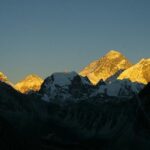
This is a good match if you want a first taste of Kathmandu heritage without committing to a multi-day plan. It’s especially useful if you’re pairing city culture with other travel, like trekking. In past experiences shared with Mountain Rock Treks, people have stacked Kathmandu sightseeing onto adventures such as Everest-area trekking, using the city day to ground themselves before or after mountains.
It’s also a strong fit for solo travelers. One solo traveler praised the way they felt warmly welcomed and cared for from the moment they arrived, and highlighted the local knowledge provided by Ketan. A small group and a driver/guide combo also reduces the stress of figuring out timing and meeting points alone.
If you’re traveling with mobility limits, you might want to consider that heritage sites can involve uneven surfaces and walking, and the schedule includes hilltop terrain at Swayambhunath. The data says most travelers can participate and service animals are allowed, but it doesn’t specify physical accessibility details—so it’s wise to check before you book if that’s a concern for you.
Tips to Get More Out of Each Stop
Respectful behavior matters in these sacred spaces. You’ll get more from the day if you treat each site as active religious space, not just a sightseeing checklist.
Bring what you’ll actually use:
- A light layer you can remove or keep depending on weather
- A small amount of cash for entrances that are not included
- Something to drink, since food and drinks are not part of the experience
Also, don’t force your day into “100 photos.” Kathmandu heritage is about details: courtyards at Durbar Square, the river context at Pashupatinath, and the hill setting at Swayambhunath. Give yourself a little attention span at each stop, and the day will feel coherent instead of chaotic.
Should You Book This Kathmandu City Tour?
Book it if you want a guided, time-managed heritage day that hits the major spiritual and historical anchors of Kathmandu Valley. The pricing makes sense for a day that includes a driver/guide and covers multiple sites in one go, and Pashupatinath being listed as free helps your budget.
Don’t book it if you want a fully all-in experience where every entrance and meal is included, or if you only want ultra-short stops. This is a heritage tour with extra costs for entrances and meals, and it includes walking and real on-site time.
If your priority is clarity—what to see, why it matters, and how to do it without wasting your day in transit—this tour is a good bet.
FAQ
How long is the Kathmandu city tour?
The tour runs about 6 to 8 hours.
What time does the tour start?
The start time is 9:00 am.
Is pickup offered for this experience?
Yes, pickup is offered.
Where is the meeting point?
You meet at Mountain Rock Treks And Expedition Pvt. Ltd., which is also used for a short trip pre-briefing.
Which heritage sites are included in the planned stops?
The planned stops are Pashupatinath, Swayambhunath, and Kathmandu Durbar Square.
Are entrance fees included?
Entrance fees are not included, except Pashupatinath is listed as admission ticket free.
Is food and drinks included?
No. Food and drinks are not included unless specified.
What is the maximum group size?
The tour has a maximum of 20 travelers.
Do I need to provide passport details?
Yes. Passport name, number, expiry, and country are required at time of booking for all participants.
Is a mobile ticket used, and are service animals allowed?
Yes, the tour uses a mobile ticket, and service animals are allowed.
Can I cancel for a full refund?
Yes. You can cancel up to 24 hours in advance for a full refund.