REVIEW · KATHMANDU
Private 12-Day All Inclusive Guided Annapurna Base Camp Trek Tour
Book on Viator →Operated by Cordial Trek Pvt. Ltd. · Bookable on Viator
Annapurna Base Camp is the classic kind of hard. This private guided trek hits the big moments fast: Gurung villages, steep forest switchbacks, and that first sight of the Annapurna massif from the sanctuary basin.
I especially like the all-inclusive approach—you’re not left scrambling for the basics. And I like that the plan builds in a gradual rhythm, with sunrise time at base camp and a long, scenic descent afterward.
The one thing to watch is that this is a real mountain trek: you’ll be trekking at altitude (the sanctuary sits over 4,000m), and the trip requires good weather, so don’t plan it like a casual weekend.
In This Review
- Key highlights worth caring about
- Why Annapurna Base Camp hits different in a 12-day rhythm
- Price and Logistics: what $1,175 really buys you
- Day 1 in Kathmandu: the welcome, the briefing, and the first sleep
- Day 2 drive to Pokhara: setting up your legs and your expectations
- Days 3 to 4: Birethanti into Gurung country (Ghandruk and Chhomrong)
- Days 5 to 6: forest switchbacks, village stops, and Deurali tea houses
- Day 7: Machhapuchhre Base Camp Valley views, then the final push to ABC
- Day 8 to 10: sunrise at ABC, then a long descent with Jhinu Danda’s hot springs
- Day 11 to 12: Pokhara back to Kathmandu and the trip certificate moment
- What the all-inclusive setup means when you’re actually hiking
- Gear you get (and why it helps)
- Meals you’re not constantly hunting for
- Permits and first aid reduce stress
- Private-group control
- Altitude, weather, and packing tips you can act on now
- Should you book this private Annapurna Base Camp trek?
- FAQ
- How much does the Annapurna Base Camp trek cost?
- How long is the tour?
- Where does the trek start and how do you get there?
- What’s included in the price?
- What is not included?
- What happens if weather is bad?
Key highlights worth caring about
- Private group setup: only your group participates, so the pace and decisions tend to match you.
- Support on the trail: guides and porters are part of the experience, and past guests praised their attentiveness and friendliness (for example, Pratip Tamang and Raj).
- Gear that actually matters: you’re provided key cold-weather gear like a down jacket and sleeping bag, plus a duffle bag.
- You get the full base-camp moment: early start on the day you arrive, then another sunrise breakfast at Annapurna Base Camp.
- Hot-spring payoff on descent: Jhinu Danda’s natural hot springs help make the long downhill feel worth it.
- Value beyond the hike: permits, transfers, first aid, maps, and a trip certificate are included—not just “directions and good luck.”
Why Annapurna Base Camp hits different in a 12-day rhythm
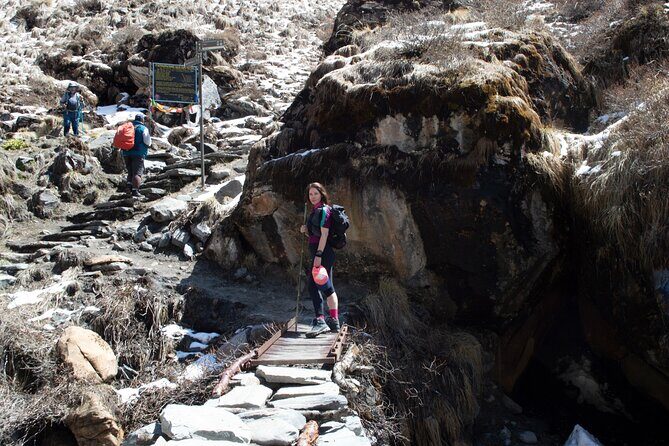
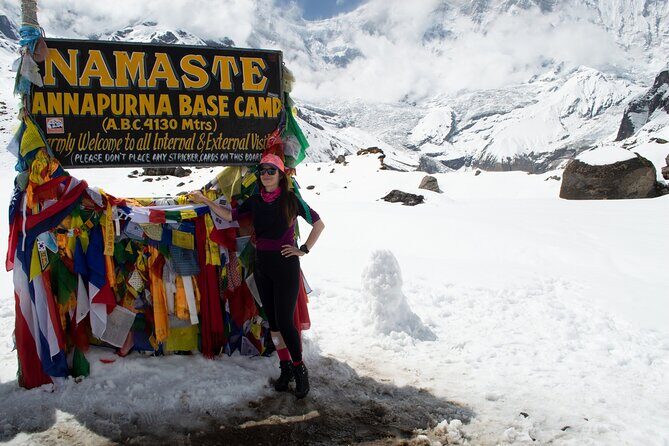
Annapurna Base Camp (ABC) isn’t just another viewpoint trek. It’s tucked into the Annapurna Sanctuary, a high glacial bowl framed by peaks from the Annapurna range. That setting is what makes the final days feel like you’ve entered a natural amphitheater—mountain walls on all sides, and the base camp sitting over 4,000m.
This is also a route that works well for the “I want the wow, but I don’t want chaos” crowd. In this 12-day plan, you’re in the mountains for long enough to earn the big views, but the structure keeps you moving with purpose: travel days get you positioned, trekking days push you forward, and the last stretch is a full descent with stops that break up fatigue.
One more detail I like: Annapurna Sanctuary has only one main entry valley between Himchuli and Machhapucchre. That “single doorway” feel is part of the magic—when you finally look around at base camp, it doesn’t feel like a random stop. It feels like the place you were aiming at the whole time.
You can also read our reviews of more guided tours in Kathmandu
Price and Logistics: what $1,175 really buys you
At $1,175 per person, you’re paying for a packaged trek, not just a hotel and a hiking map. The key value is that this includes things that are easy to forget until you’re already in Nepal.
Here’s what stands out as real “value you can use”:
- Down jacket, sleeping bag, and duffle bag are included (and they’re returnable), which matters because the cold at altitude can sneak up on you.
- Accommodations along the route are included, which reduces the guesswork during a trek.
- Permits are included (important for this region).
- Meals are included daily enough to keep the trek from turning into constant snack math (breakfast 11 times; lunch 8 times; dinner 8 times).
- Transport is handled: Kathmandu ↔ Pokhara via tourist coach/bus, plus the PKR-Birethanti-PKR private transfers.
- First aid, trekking map, and trip certificate are part of the package.
What’s not included is where you should plan carefully:
- Tips/extra gratitude for guide and porter.
- Travel insurance (it’s described as compulsory).
- Any unspecified meals.
So, if you want a trek where the heavy lifting is done for you—permits, gear, meals, transfers—this price can look fair. If you prefer total independence and you already own your cold-weather gear, then you’d compare this against a lower-cost DIY or semi-guided option. But this package aims to reduce friction and keep you focused on walking and acclimatizing.
Day 1 in Kathmandu: the welcome, the briefing, and the first sleep
Day 1 starts with pickup at Tribhuvan International Airport and a warm welcome from the trek company representative. You check into a hotel and get briefed on the upcoming trek, plus an introduction to your guide.
Why this matters: ABC treks succeed or fail based on small things—how you understand the schedule, how you plan layers, and how comfortable you feel with the pace. A proper briefing on day one helps you avoid the classic mistake of starting the trek underprepared or overconfident.
You also gain a little breathing room from the first-day timing: you’re not trekking on arrival day. It’s a buffer day with logistics handled, which is a nice match for moderate physical fitness travelers who want to enjoy the experience rather than fight it.
Day 2 drive to Pokhara: setting up your legs and your expectations
You take an early 6–7 hour scenic drive from Kathmandu to Pokhara by luxury tourist bus. Pokhara lakeside is where you spend the night, with time in the evening to explore.
This is a smart reset day. Long drives can be uncomfortable, but Pokhara helps you shake off arrival fatigue and start thinking like a trekker: hydration habits, layer choices, and the mental shift from traffic noise to trail planning.
The best part of this day is that it prevents the trek from starting immediately after jet lag. If you land in Nepal feeling tired, this kind of staging day is what makes the next days feel manageable instead of rushed.
Days 3 to 4: Birethanti into Gurung country (Ghandruk and Chhomrong)
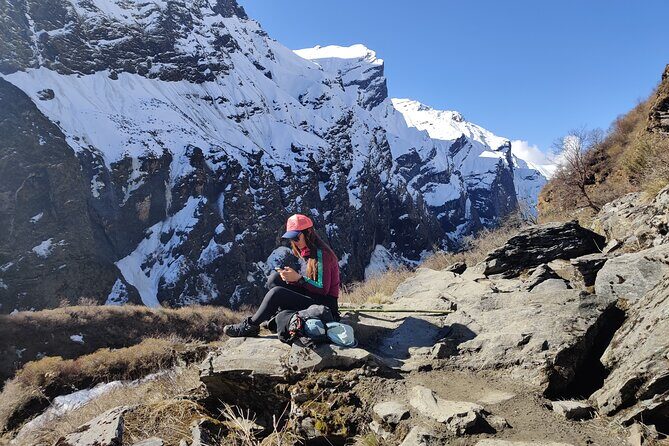
Day 3 begins with the trek start area at Birethanti, after a short drive from Pokhara. From there you head toward Ghandruk, trekking for about 5–6 hours.
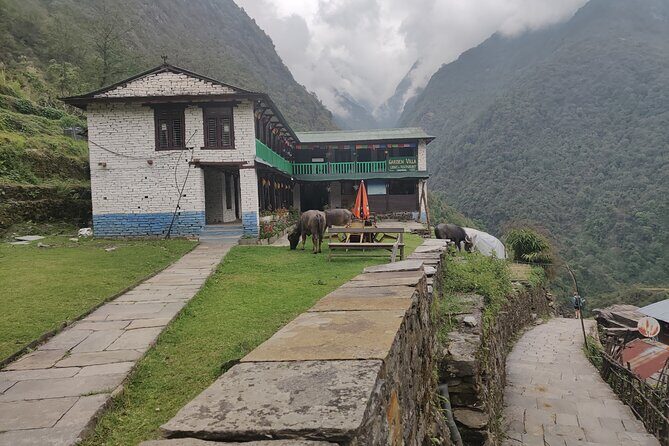
Ghandruk is where you get your first real taste of Gurung culture—traditional hospitality, home-style food, and a sense of village life at the base of the hills. The route also gives you the “I’m really in Nepal” feeling fast: scenic trails, waterfalls, and big mountain glimpses along the way. You’re not just walking through scenery; you’re walking through a living community.
Day 4 continues to Chhomrong with roughly 4–5 hours of trekking. Chhomrong is described as a modern Gurung village, and the trek passes through farming scenery and dense forest.
What to watch on these two days:
- Your legs will feel the difference after the first long hiking day.
- Forest routes can slow you down even when the distance isn’t huge—so go easy and let the guide’s pace work for you.
- You’ll start learning what “altitude time” feels like, even before you reach the highest points.
You can also read our reviews of more private tours in Kathmandu


Days 5 to 6: forest switchbacks, village stops, and Deurali tea houses
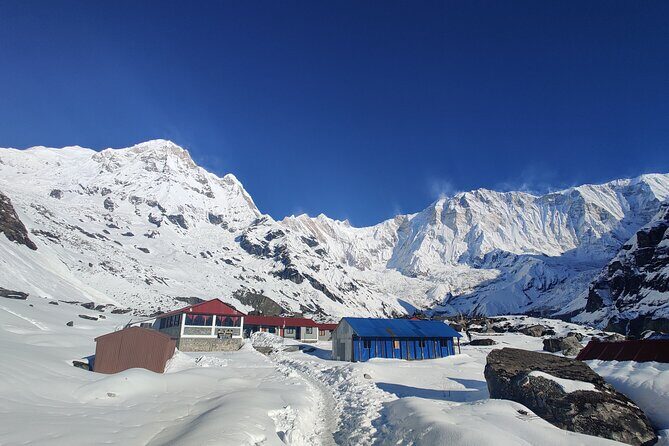
Day 5 goes from Chhomrong to Sinuwa in about 2 hours, then continues with Dobhan for about 4 hours. Dobhan is another small Gurung village and the description highlights dense forest plus wild plants and animals.
Day 6 moves you toward Deurali with around 5–6 hours of hiking (the route is described as passing through dense forest and waterfalls). Deurali is known for tea houses, and that fits the practical reality of these altitude bands: you’ll be thankful for frequent places to warm up, sip something hot, and reset your breathing.
If there’s a “style” to ABC treks, this is it: not one dramatic moment, but many smaller ones. A long forest day can be mentally harder than a day with a huge view—so these breaks matter. You’ll likely feel cold sooner than you expect, especially after clouds or shade roll in.
Also, this is where the provided cold gear becomes useful. A plan that includes a down jacket and sleeping bag means you’re not stuck relying on improvised layering. It helps you sleep better at night, which then helps you walk better the next day.
Day 7: Machhapuchhre Base Camp Valley views, then the final push to ABC
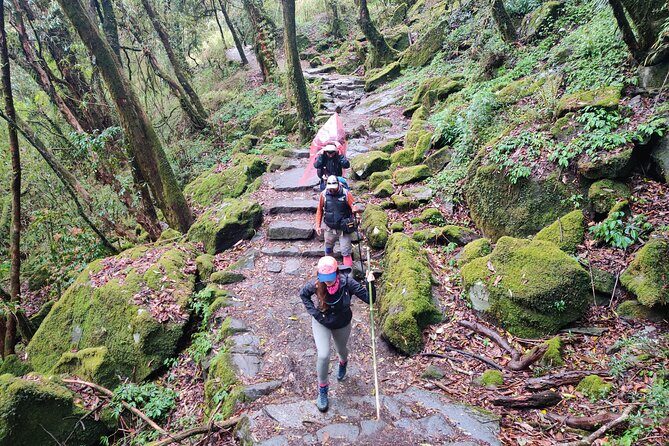
Day 7 is one of the most scenic-feeling days. You hike 3–4 hours to Machhapuchhre Base Camp (MBC) via the MBC valley, then continue for about 2–3 hours to Annapurna Base Camp.
This day works because it gives you a “preview” of the terrain before the final destination. MBC is described as an arrival point before you go on to ABC, and that structure helps your eyes adjust to what base camp really looks like—big, steep, and built for mountain drama.
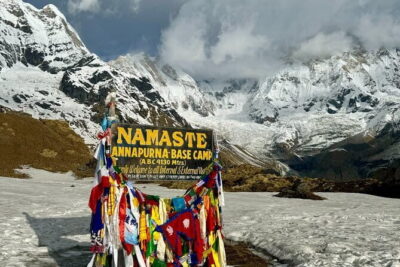
At ABC, the package emphasizes the sunrise and sunset experience, and you sleep at a tea house at base camp. The tea house part matters: you’re not just “at” the base camp; you’re there for an evening routine that lets you enjoy the mountain light rather than rush out as soon as you arrive.
Day 8 to 10: sunrise at ABC, then a long descent with Jhinu Danda’s hot springs
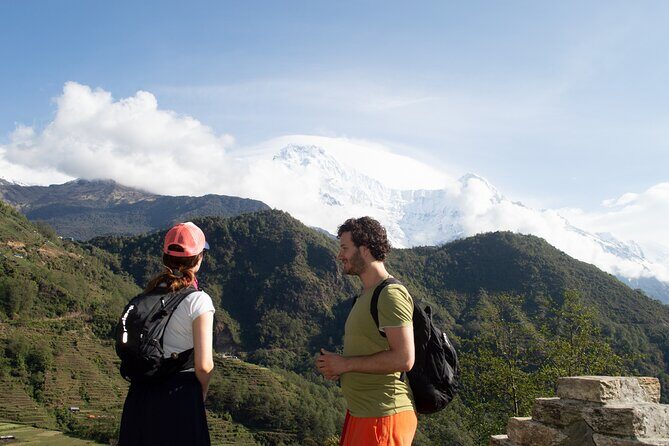
Day 8 starts with early morning breakfast right at Annapurna Base Camp, after sunrise views. Then you trek down roughly 7–8 hours toward Sinuwa.
This is a key day for energy management. Descents can drain you if you stride too fast or don’t control your knees. The long downhill is often the reality-check portion of the trek—everything looks beautiful, but your body is doing the work.
Day 9 continues downhill to Jhinu Danda in about 4–5 hours, and Jhinu Danda is famous here for natural hot springs. That’s the kind of reward that makes sense on the Annapurna trail: after days of cold air and crisp mornings, warm water is not a luxury—it’s recovery.
Day 10 drops you toward Birethanti for around 4–5 hours, then you transfer back to Pokhara for an evening celebration and farewell to your trekking crew.
I like this sequence because it gives you both the emotional arc and the physical arc:
- Day 7–8: the peak “destination moment.”
- Day 9: recovery plus relief.
- Day 10: community celebration and reset.
It’s a tidy way to close the trek without disappearing into travel fatigue immediately.
Day 11 to 12: Pokhara back to Kathmandu and the trip certificate moment
Day 11 involves driving back to Kathmandu for 6–7 hours. The plan also offers an optional flight (about 30 minutes) back to Kathmandu if you want to shorten travel time.
Day 12 is the finish line: you receive a Trip Certificate and get dropped back to the airport about three hours before departure.
This last day structure is genuinely helpful. After a trek, your body and mind are still finishing tasks—packing, eating, catching up, and doing the logistics that keep you safe on departure day. A clear end plan means you’re not improvising transport at the worst possible moment.
What the all-inclusive setup means when you’re actually hiking
On paper, “all inclusive” can sound vague. On this trek, it’s fairly concrete, and that’s why it feels practical.
Gear you get (and why it helps)
You’re provided down jacket, sleeping bag, and a duffle bag. That means you can pack smarter and avoid buying or renting cold-weather gear last-minute. The trek is described as requiring moderate physical fitness, and gear support helps turn that “moderate” into realistic, comfortable effort.
Meals you’re not constantly hunting for
You have breakfast daily listed for 11 mornings, and lunch and dinner are included on multiple days. That matters because it keeps you from waiting too long or making poor choices when you’re tired and hungry.
Permits and first aid reduce stress
The included permits are important for this region. First aid is also included, which you’ll appreciate once you remember altitude walking is unforgiving when something small becomes big.
Private-group control
It’s private, so your group is your only group. That can mean fewer surprises around pacing, rest stops, and how quickly you can adjust the plan based on how people are feeling.
Past guests praised crew members for being friendly and responsive, and I’d treat that as a sign to prioritize good communication. If you want a trek where you can ask questions and get real answers, this kind of guided setup is a strong match.
Altitude, weather, and packing tips you can act on now
Annapurna Sanctuary sits over 4,000m, and base camp is the centerpiece of the altitude experience. The trek is described as requiring moderate physical fitness, but altitude adds a second layer of challenge—breathing and sleep matter as much as leg strength.
You should plan for:
- Cold mornings and wind near higher points, even if the sun looks friendly.
- Slower hiking days where “time on trail” feels longer than the clock says.
- Weather-driven adjustments: the experience requires good weather, and the policy notes you’ll be offered another date or a full refund if canceled due to poor weather.
Packing-wise, the fact that you get a down jacket and sleeping bag reduces the biggest risk: being too cold at night. You still want to bring layers you can wear on the move, plus a plan for staying dry. If you’re unsure, ask your guide or the company before you leave.
Finally, remember the base camp days are short and intense by design. Sunrise is worth it, but your body still needs warm clothes and calm pacing after. Go steady, drink water consistently, and let your guide handle the schedule rhythm.
Should you book this private Annapurna Base Camp trek?
I’d book this if you want:
- A private guided trek with logistics handled: transfers, permits, meals, and included gear.
- A structured plan that gets you to ABC with time for sunrise and enough descent recovery to enjoy the hot springs.
- A crew-centered experience, which past guests strongly emphasized through praise of guides and porters.
I’d think twice if:
- You prefer full DIY travel where you choose every guesthouse and meal yourself.
- You’re hoping for a “guaranteed easy” trek—altitude and weather can make even a well-run plan feel tough.
One practical nudge: because you’re booking a trip that depends on good weather, keep some flexibility in your wider Nepal schedule. If your Nepal days are already packed with no buffer, add a cushion so a reschedule won’t ruin everything.
FAQ
How much does the Annapurna Base Camp trek cost?
The price is $1,175.00 per person.
How long is the tour?
It’s listed as approximately 12 days.
Where does the trek start and how do you get there?
You’re picked up from Kathmandu Airport, then you travel to Pokhara. The trekking starts on day 3 from Birethanti.
What’s included in the price?
Included are returnable trekking equipment (down jacket, sleeping bag, duffle bag), accommodations, airport and some private transfers, trekking permits, first aid, a company t-shirt, a trekking map, meals (breakfast 11 times, lunch 8 times, dinner 8 times), and a trip certificate.
What is not included?
Not included are tips/gratitude for guide and porter, travel insurance, and any unspecified meals.
What happens if weather is bad?
The experience requires good weather. If it’s canceled due to poor weather, you’ll be offered a different date or a full refund.